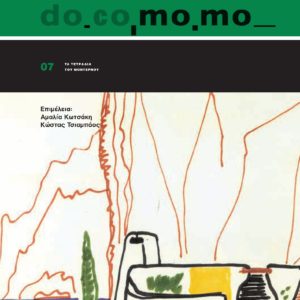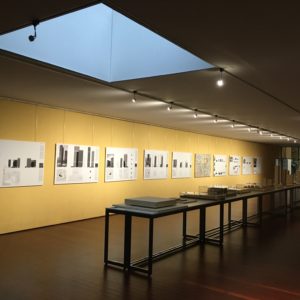
Docomomo Australia is sharing the exhibition Iconic Australian Houses by Karen McCartney, in partnership with Architecture Foundation Australia (2017). Karen McCartney takes us through 11 case studies of iconic Australian houses and the architects who designed them. Russell Jack – The Jack House Peter McIntyre – The Butterfly house Peter Muller – The Audette house Robin Boyd – The Walsh street house Enrico Taglietti – The Dingle house Bruce Rickard – The Marshall house Ken Woolley – The Palm beach house Barrie Marshall – The Phillip Island house Andresen O’Gorman – The Mooloomba house Durbach Block – The Droga…
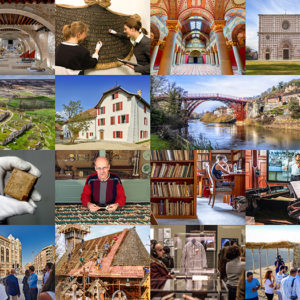
The European Commission and Europa Nostra have announced the winners of the 2020 European Heritage Awards/Europa Nostra Awards, funded by the EU’s Creative Europe programme. Europe’s top honour in the heritage field goes to 21 exemplary achievements from 15 European countries. This year’s impressive collection of award winners range from the restoration of Rubens’ garden pavilion in Antwerp (Belgium), to the revival of the renaissance arsenal on the island of Hvar (Croatia); from the trans-European network “Tramontana” dedicated to the research of the tangible and intangible heritage of mountainous regions, to the sensitive preservation of a cultural landscape formed by subterranean…
TEMPORÁNEA. Revista de Historia de la Arquitectura is a journal of the editorial seal of the University of Seville EUS, preferably addressed to the academic community focused on international research in History of Architecture. It publishes annually scientific articles selected by the double-blind peer review system and through an editorial process characterized by quality, rigor and transparency, monitored by its editorial team committee with a marked international character. Research in the History of Architecture is approached from any discipline, chronological period and geography, and promotes the diversity and complexity of History as an inalienable value. In addition to this transversal and…
The Call for Papers for the 8th issue of Revista Eviterna is open for receiving papers (Articles, Varia, Exhibition&Art reviews, biblio/books reviews). All the interested are invited to collaborate in the eighth number, whose topic line will be -Questions of art in general-. You can find the appointment rules, bibliography and the template to which the articles should be adapted in the section “Author Guidelines” of Revista Eviterna’s website. To receive articles and review them, the author must register on the web with the role of “Author”. In order to launch the eighth issue of the journal in September 2020,…
Competition Brief Thanks to social media, more people than ever now consume architecture every day through their feeds. However, their attention is fleeting — with millions of architectural ideas flowing across the web, each designer has just a brief moment to make an impact. This means one image or drawing needs to possess the power to tell a whole story on its own, in seconds. For any designer, producing a viral drawing might just kickstart their career. So, the #OneDrawingChallenge is laid down: Can you create a single drawing that tells the story behind a complex piece of architecture? Your task is as…
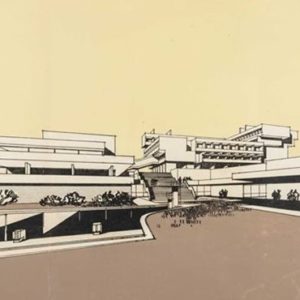
SYMPOSIUM THEME This year’s symposium will reflect on the architectural heritage of universities, their deployment for the activities of the institution, the potentials of these historic structures in fostering academic research and education, and the challenges they present to their owners. The sub-themes of the symposium are developed to encourage personnel from across the university – faculty, undergraduate and postgraduate, estate management, development office – to participate in discussion, debate and reflection. Architectural heritage as a pedagogical resource Historical architecture on campus are landmarks in the institution’s history; steeped in the collective memories of students across generations, they enhance the…
In a 1995 article on the renewal of architectural criticism, French architect and critic Bernard Huet referred to Charles Baudelaire to define art criticism as necessarily – in the poet’s words – “partial, impassionate, political”. During the 1990s, perhaps as a reaction to the 1980s, when in many specialized publications architectural criticism was identified as “communication” or even as promotion of architects and architectures, it emerged an extensive nostalgia for a notion of criticism associated to the historical avant-gardes. In this “committed” criticism or in the “politicized” one it was possible to emphasize the critic’s influential and active role in…
The Institute of Art History – The Cvito Fiskovic Centre in Split calls for papers for an international conference of academics and professionals: “Watching, Waiting – Empty Spaces and the Representation of Isolation”. Across the globe, the year 2020 was unexpectedly marked by the COVID-19 pandemic. Photographs of empty public spaces – the locations of historic events, celebrations, protests, social gatherings, crowds of tourists – from Milan, Paris, London, Istanbul, and Hong Kong to Dubrovnik and Split… these sights stir up bittersweet emotions. On the one hand, these pictures are intensely beautiful. They recall artist’s books and historical photographer’s monographs…
Docomomo International is pleased to announce the colloquium “Arquitectura: Investigar a Prática” [“Architecture: Investigating the Practice”] with the participation of Ana Tostões, Bárbara Silva, João Luís Carrilho da Graça, João Belo Rodeia, Marta Sequeira, Nuno Grande, Paulo Tormenta Pinto, Pedro Bandeira e Xavier Monteys. The colloquium is organized by the The Architecture Department of the Universidade Autónoma de Lisboa. and will be happening next Friday, May 29, 2020, at 10:00 a.m. (GMT + 1) with the assistance of the Zoom platform (https://videoconf-colibri.zoom.us/j/94086081397). To know more about the UAL’s online conferences, go to the website.
Docomomo International wishes to convey the most sincere condolences at the passing of the professor and historian of Spanish art, Antonio Bonet Correa, to his family and friends. Antonio Bonet Correa (La Coruña 1925-Madrid 2020), was one of the most distinguished figures in the conformation of art history in Spain if not its inventor. He was a handsome man, distinguished-looking, a little French in taste and form; he had a shrewd sense of humor and a capacity for storytelling that captivated those willing to go beyond what was expected in the second race. Professor Bonet, Don Antonio – as the…