Sonja Hnilica (TU Dortmund) and Riklef Rambow (Karlsruher Institut für Technologie, KIT) invite papers for an issue on “Identifications of the Postmodern“ (Wolkenkuckucksheim | Cloud-Cuckoo-Land | Воздушный замок, Vol. 24, No. 41). Denise Scott-Brown stated in 1990: “We are modernists, not postmodernists. No one is a postmodernist. Maybe postmodernism is dead.” Only ten years ago, the architecture of the socalled postmodern era suffered from a rather dubious reputation. Since then, the perspective seems to have shifted radically. The 1980s are enjoying a revival not only in the fashion world and, an increased interest in postmodernism can be observed in the…
For centuries the international law has developed a vast legal framework of Conventions and Declarations to protect cultural heritage. History also teaches us that it is not always possible to stop those who, with wickedness and contempt, offend the cultural heritage and identities of communities around the world. Following the political events that are offending cultural heritage and destroying the identity of the communities in so many countries of the world, we are urging, today, citizens of the world to reflect together about the value of the “soft power” because the culture is an expression of the communities and stressing…
Shopmies.com, the Mies van der Rohe Foundation library, offers an extensive and careful selection of books about Mies van der Rohe that incorporates the latest news published worldwide: Architectual Portraits. The Mies Project: The Berlin-based photo artist Arina Dähnick follows in the footsteps of Ludwig Mies van der Rohe most worlwide iconic buildings in her study of city life and urbanity, displaying the contrasts of inside and outside, of blurriness and focus, reflections and mirror images, and playing with the viewer’s perception. Almost Nothing: The book collects work by one hundred various artists that comment on or appropriate buildings, designs,…
“The Bauhaus (1919–1933) is widely regarded as the twentieth century’s most influential art, architecture, and design school, celebrated as the archetypal movement of rational modernism and famous for bringing functional and elegant design to the masses. In Haunted Bauhaus, art historian Elizabeth Otto liberates Bauhaus history, uncovering a movement that is vastly more diverse and paradoxical than previously assumed. Otto traces the surprising trajectories of the school’s engagement with occult spirituality, gender fluidity, queer identities, and radical politics. The Bauhaus, she shows us, is haunted by these untold stories. The Bauhaus is most often associated with a handful of famous…
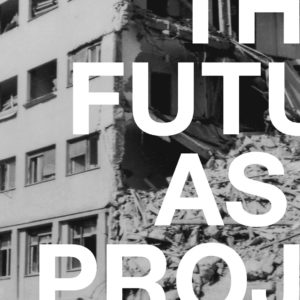
“The Future as a Project: Doxiadis In Skopje” an edited book by Docomomo Greece is now available in an open access in digital format. It presents for the first time Doxiadis’ work in Skopje, which includes strategic plans for the city and a new outline for the master plan. In addition, it presents the work of Kenzo Tange for Skopje’s city centre, and showcases a series of modernist buildings authored by leading Yugoslavian architects that still stand in the city today. It finally comments on ‘Skopje 2014’ project and its ‘conflict’ with the modern heritage of the city. Edited by:…
The results of the research Rehabitar project coordinated and developed by the Andalusian Institute of Historical Heritage (IAPH) between 2106 and 2018, are now summarized in the choral book entitled _re-HABITAR EL CARMEN: A project on Contemporary Heritage, edited as Notebook number 32 of the periodicals of the institution. The Andalusian Institute of Historical Heritage, on February 18 at 12 noon at its headquarters an academic act of the presented and distributed the work to the scientific community, which was implemented with a visit and a presentation to the neighborhood community of the Barriada de Nuestra Señora del Carmen that…
Joelho – Journal of Architectural Culture n.11 The next issue of the journal Joelho is devoted to crossings of reciprocal lessons in landscape, archaeology and architecture studies. It focuses on the disciplinary intersection and considers studies devoted to reflection about the sustainability and conservation of peripheral archaeological sites. It takes into account the great threats that abandonment and degradation involves or the climate change implies (in particular on sites located on the shore of fragile coastline systems subject to collapse, changing seawater levels, river and stream flooding regimes, and forest fires) and the actions concerning the mitigation of threats to heritage (fences and…
UMAR (Union of Mediterranean Architects) invites researchers and practitioners involved in the process of preservation, conservation, renovation or transformation of contemporary architecture buildings, sites and neighbourhoods in the countries around the Mediterranean to present their works at the International Conference Contemporary Architectural Rehabilitation on the Mediterranean that will take place in Montpellier, France, on the 23rd and 24th of June 2020. Please submit abstracts and projects no later than February 29th, 2020 (24 pm GMT) UMAR is now accepting proposals for : Conference papers resulting from research promoting tailored rehabilitation of Contemporary Heritage buildings, sites and neighbourhoods Rehabilitation projects preserving…
“Avant-Garde in the Cornfields is an in-depth study of New Harmony, Indiana, a unique town in the American Midwest renowned as the site of two successive Utopian settlements during the nineteenth century: the Harmonists and the Owenites. This engrossing and well-documented book explores the architecture, topography, and preservation of New Harmony during both periods and addresses troubling questions about the origin, production, and meaning of the town’s modern structures. An important reappraisal of postwar American architecture from a rural perspective, it provides provocative ideas about how history is interpreted through design and historic preservation – and about how the extraordinary…
“X-Ray Architecture explores the enormous impact of medical discourse and imaging technologies on the formation, representation and reception of twentieth-century architecture. It challenges the normal understanding of modern architecture by proposing that it was shaped by the dominant medical obsession of its time: tuberculosis and its primary diagnostic tool, the X-ray. Modern architecture and the X-ray were born around the same time and evolved in parallel. While the X-ray exposed the inside of the body to the public eye, the modern building unveiled its interior, dramatically inverting the relationship between private and public. Architects presented their buildings as a kind…