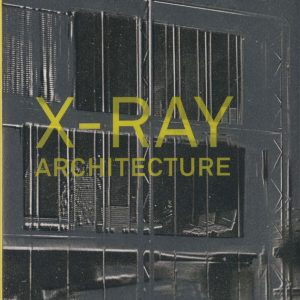
Gaston Eysselinck (1907-1953): In the footsteps of Le Corbusier

“The limited oeuvre of the Ghent architect Gaston Eysselinck provides some of the most compelling evidence of innovation in Belgian architecture. During his studies, he came across publications about the European Avantgarde, Russian architecture and the work of Le Corbusier. In November 1930 he took part in the CIAM Congress in Brussels and appeared in the legendary group photo along with Mies van der Rohe and Le Corbusier. His own house, which also includes his office (1930-1931), and the Peeters house (1932), which both appeared in Alberto Sartoris’ publication in Italy in 1935, can be considered as the built manifesto…

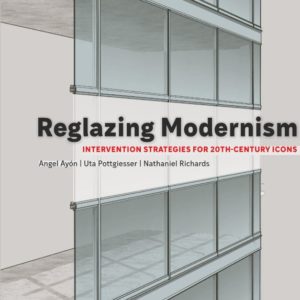
Reglazing Modernism: Intervention Strategies for 20th-century Icons

I discovered by working with actual glass models that the important thing is the play of reflections and not the effect of light and shadow as in ordinary buildings   Ludwig Mies van der Rohe[1] Should We Save Mid-Century Modern Icons That Hurt The Environment? James Timberlake,  2015[2] Reglazing Modernism Between the above quoted poetic remark by star architect Mies and sceptic recent observations of  architect James Timberlake, manoeuvre the authors. The publication, by Birkhäuser Architecture in a German and an English edition, introduces itself as the first one of a serial. The list of examples (nine in USA and eleven…

European Heritage Tribune Newsletter

The European Heritage Tribune newsletter has arrived! ! During the European Cultural Heritage Summit on 28 October in Paris, Mrs. Catherine Magnant, Advisor of the European Commission, and Mr. Hermann Parzinger, Executive President of Europa Nostra, officially launched the newsletter which collects and shares the latest news and best practices on cultural heritage from all European countries and organizations. By doing so, this newsletter seeks to inform and inspire cultural heritage professionals. The newsletter is free and independent, and a legacy of the European Year of Cultural Heritage 2018. To subscribe follow the link .

Notes from the Underworld: An Architectural Exploration

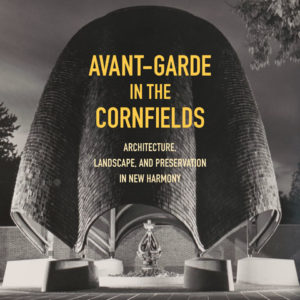
“Since early times, humans have explored the space below their feet for different purposes: to flee persecution and war, to find protection from severe climates, to improve urban life—and more recently, to solve environmental problems. A rare look at old and new subterranean structures, this book examines the underworld through the lenses of wartime, life and death, religious and secular rituals, and adaptive reuse. The projects described range widely in time period and type, from a house in a defunct nuclear silo to an Arctic seed bank, a Beirut nightclub, art venues, an Italian winery, and a monastery carved into…

Une émergence du design. France, 20e siècle

Stéphane Laurent – the Head of Art & Industry studies (Decorative Arts, Fashion and Design) of the University Pantheon-Sorbonne, School of Art History and Archeology – has directed the publication Une émergence du design. France, 20e siècle [An emergence of design. France, 20th century] (2019) which is now available online. The publication assembles a collection of essays, in French and English, from various professionals, ranging from decorative arts to graphic design and politics. Sommaire Avant-propos Design et politique Stéphane Laurent Décoration, design et politique : l’École nationale supérieure des arts décoratifs de 1940 à 1968 Des arts décoratifs au design…

Article: Can you still hear the Bauhaus?

With a celebrations of the centennary of the Bauhaus coming to an end, the asked creative people for their opinions on how they found the centenary of the Bauhaus: did it inspire them? Did it motivate, annoy, bore or change them in any way? Their opinions have been shared in the article “Can you still hear the Bauhaus?” in the online magazine section “Understand the Bauhaus”, by Bauhaus 100. Full article available here.  

Call for Projects and Ideas: Future Architecture Platform

On 18 November 2019 the Future Architecture Platform launched a new open call, which extends until 6 January 2020. This European platform is looking for multi-disciplinary emerging creatives working on innovative projects and ideas for the future of architecture and related to our living environment to apply to participate in the 2020 European Architecture Programme. Entries will be evaluated by a jury made up of former students of the Platform and the public, through an online vote. Aiming to strengthening the creative exchange and promote the development of a network, the selected will participate in a pitching session between applicants…

I collegi di Giancarlo De Carlo a Urbino. Piano di Conservazione e Gestione

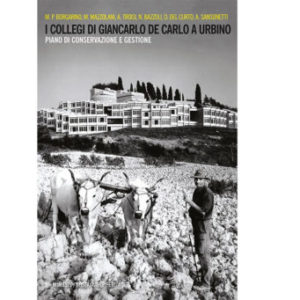
The University Colleges of Gaincarlo De Carlo in Urbino – Conservation and Management Plan This publication presents the Conservation and Management Plan of Collegi universitari di Urbino [the University Colleges of Urbino], carried out between 2015 and 2017 with the support of the Keeping It Modern program of the Getty Foundation and published on the occasion of the centenary of the birth of Giancarlo De Carlo (1919 – 2019) . In the conservation plan different themes converge, from the conservation of materials and furnishings to issues related to sustainable use, which are tackled starting from a rigorous analysis of historical,…

Bauhaus Architecture 1919-1933

“Focusing on buildings designed by Bauhaus members from 1919 to 1933, this book features some 65 famous and lesser-known building projects in Germany, Vienna, Barcelona, Prague, and Budapest by architects including Walter Gropius, Marcel Breuer, and Ludwig Mies van der Rohe. Arranged chronologically, Bauhaus Architecture offers informative commentary along with photographs, taken especially for this book. Engels’ photographs show many buildings in their newly restored condition and reflect the full range of Bauhaus architecture, one of the most influential schools of architecture in the 20th century.” From the publisher. To order this book, please visit this website.

BAUHAUS Reviewed 1919-1933

“This full-length archive CD explores the highly influential Bauhaus school of art and architecture, which operated in Germany between 1919 and 1933. The spoken word element is centred on a revealing talk by Walter Gropius, the architect and theoretician who founded the Bauhaus in 1919. The album also includes contributions from the school’s third and final director, architect Ludwig Mies van der Rohe, as well as teacher Josef Albers. All interviews are in the English language. The musical content features piano pieces written between 1919 and 1925 by six composers associated with the Bauhaus: Arnold Schoenberg, Josef Matthias Hauer, George…