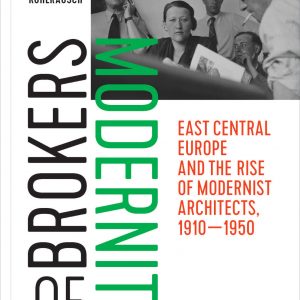
“The story of modernist architects in East Central Europe The first half of the twentieth century witnessed the rise of modernist architects. Brokers of Modernity reveals how East Central Europe turned into one of the pre-eminent testing grounds of the new belief system of modernism. By combining the internationalism of the CIAM organization and the modernising aspirations of the new states built after 1918, the reach of modernist architects extended far beyond their established fields. Yet, these architects paid a price when Europe’s age of extremes intensified. Mainly drawing on Polish, but also wider Central and Eastern European cases, this book delivers…
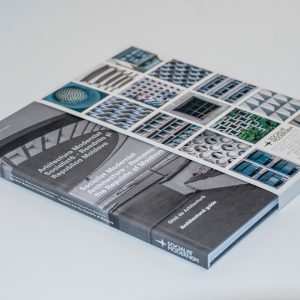
The publication “Socialist Modernist Architecture – Romania and the Republic of Moldova” is available. It is a result of B.A.C.U. Association’s efforts to publish the Socialist Modernist research. “The 242 architecture objects included in this volume have been organized by function, into eight sections. At the beginning of each section, a map shows the location of each of the buildings described. The authors’ viewpoints and assessments make this volume a surprising incursion into the history of architecture.” Text provided by the publisher. To order the book, please visit: link.
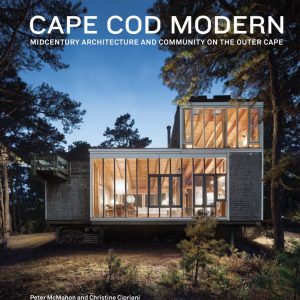
“In the summer of 1937, Walter Gropius, founder of the Bauhaus and a professor at Harvard’s new Graduate School of Design, rented a house on Planting Island, near the base of Cape Cod. There, he and his wife, Ise, hosted a festive reunion of Bauhaus masters and students who had recently emigrated from Europe: Marcel Breuer, Herbert Bayer, László Moholy-Nagy, Xanti Schawinsky and others. Together they feasted, swam and planned their futures on a new continent, all sensing they were on the cusp of a momentous new phase in their lives. Yet even as they moved on, the group never…
Panel discussion with jury members of the 2018 Mies Crow Hall Americas Prize. This event will be moderated by Dirk Denison and will have the presence of panelists Ricky Burdett CBE, Jose Castillo and Claire Weisz, jury members of the most recent MCHAP 2018. Together, they will reflect on the process, deliberation, and decision made during the prize. The discussion invites the audience to go behind-the-scenes of the MCHAP jury process by describing their selection criteria, the importance of architectural vision and client collaboration, and value of visiting the projects in person with architects and clients. Venue: Behind the Prize:…
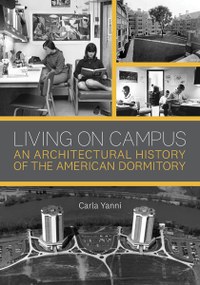
“Every fall on move-in day, parents tearfully bid farewell to their beloved sons and daughters at college dormitories: it is an age-old ritual. The residence hall has come to mark the threshold between childhood and adulthood, housing young people during a transformational time in their lives. Whether a Gothic stone pile, a quaint Colonial box, or a concrete slab, the dormitory is decidedly unhomelike, yet it takes center stage in the dramatic arc of many American families. This richly illustrated book examines the architecture of dormitories in the United States from the eighteenth century to 1968, asking fundamental questions: Why…
“The photographer Lucien Hervé created an artistic language that earned him wide recognition in both 20th century architecture as well as well as photography; he was a gifted artist with an enormous sensitivity and precision capable of transcending the visual characteristics to encourage profound conceptual reflections. In 1959, Hervé traveled around Spain with his camera and took pictures of Mediterranean houses and the monastery at El Escorial for two photobooks that were never published. However, Hervé continued with these projects and created narrative processes supported by rigorous historic research. The exhibition presents for the first time these two inedited projects:…
“During his long career as a photographer, Martin Parr has always photographed on beaches, particularly in the UK. He has often used the beach as a laboratory to experiment with new cameras and techniques. So far example, when he changed from black and white to medium format color in the early 80s his first major project was about New Brighton, a run down seaside resort near Liverpool. In recent months he has started exploring the beach with the aid of a telephoto lens. This lens is rarely used in the world of art and documentary photography so it is a…
“Sigfried Giedion (1888–1968) and Carola Giedion-Welcker (1893–1979) were among the most distinguished and influential scholars of art and architectural history during the 20th century’s earlier decades. Of particular impact was their role in connecting leading protagonists of modernism in architecture, art, and literature, such as Alvar Aalto, Hans Arp, Constantin Brancusi, Marcel Breuer, Max Ernst, Walter Gropius, Barbara Hepworth, Le Corbusier, László Moholy-Nagy, Piet Mondrian, or Sophie Taeuber-Arp. The discourses they initiated, for example on the New Vision in photography or a ‘Synthesis of Arts’, have lost nothing of their relevance and provide new starting points until the present day….
“Considered one of the most influential schools of art and design of the twentieth century, the Bauhaus forged a unique educational vision that blended theory with practice in order to cultivate a new generation of artists and designers. Conceived in tandem with the Getty Research Institute’s gallery exhibition, the online exhibition Bauhaus: Building the New Artist offers an in-depth look into the school’s novel pedagogy. Highlighting student explorations, masters’ theories, and a variety of colorful media drawn from the GRI’s archives, the project culminates with three interactive exercises inviting viewers to immerse themselves in surprising aspects of Bauhaus curriculum.” Text provided by…
“Annually the Europe Regional Group meets and promotes an international scientific symposium, this year being organized by ICOMOS Portugal. The event will take place in Lisbon, at ISCTE-Institute University of Lisbon, from June 13th to 16th, 2019. The scientific symposium will be dedicated to the theme “Contemporary interventions in cultural heritage: theory and practice”. GOALS The rehabilitation of the built heritage has become the central activity in the construction sector in Portugal. The recent pressure from tourism and speculation has accelerated this phenomenon, principally in historic centers, in classified and protected areas; however, not always with respect for the…