The Office of Architectural, Urban and Landscape Research launched in partnership with the Ministry of Ecological and Solidarity Transition and the Ministry of Territorial Cohesion and Relations with Local and Regional Authorities, in connection with the Urban Planning Plan construction architecture, the National Agency for Urban Renewal, the Caisse des dépôts et consignations and the Social Union pour l’habitat, the program “Architecture du XXe siècle, matière à projet pour la ville durable du XXIe siècle” [“20th Century Architecture, Project Material for the 21st Century Sustainable City”], for the period 2016-2020. General presentation of the research programme The built heritage inherited from…
The Society of Architectural Historians seeks nominations and self-nominations for five members to serve on a newly-established SAH Inclusion, Diversity, Equity, Accountability, and Sustainability (IDEAS) Committee. SAH recognizes that it needs to examine its culture, processes, and structure and take actionable steps in order to meet the goals laid out in its IDEAS Initiative. To that end, SAH will have an IDEAS Committee made up of SAH members, Board members, and staff. The Committee members will be charged with developing and guiding a Diversity, Equity and Inclusion policy that also encompasses Accountability and Sustainability. The Committee will work with the SAH…
EDA, VOL. 8, n.1, 2021 Editors | Curatori Olimpia Niglio, Noriko Inoue, César Augusto Velandia Silva Title: “Human Heritage and Cultural Landscape. Contemporary declinations” The 1992 UNESCO Convention is an important legal reference for the knowledge an enhancement of cultural landscapes that represent a heritage in which nature bears the marks of man’s work and tells its history, experiences, memories, and meanings. These landscapes describe the evolution of human society and the transformations achieved over time that have then conditioned the development of the territories. The rapid social and economic changes that we are witnessing in recent decades have led…
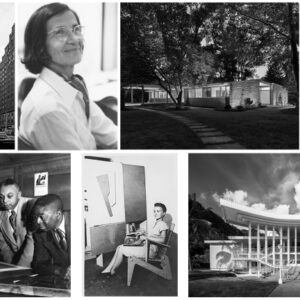
Docomomo International is pleased to inform that Docomomo US continued to develop their annual advocacy theme “The Diversity of Modernism”. Docomomo US and its chapters focused their attention on the work of diverse designers, updating a document where is represented architects and designers of color and women who made significant contributions to the Modern Movement. There is now a Special Edition newsletter is dedicated to highlighting some of these designers which can be find in Docomomo US website.
International Symposium, organized by GERPHAU Lab (philosophy, architecture, urban world, EA 7486 Ecole Nationale Supérieure d’Architecture de Paris-La Villette) and the ARENA Association. Paris, 11-12 March 2021 No one knows what the real consequences for habitat, climate change and the degradation of the biosphere will be in the next fifteen, thirty or fifty years. But the disasters are already there. Whole neighborhoods collapse and their inhabitants are drowned, burned, swept away, suffocated by physical phenomena that clash with human settlements. New threats are intensifying. The recent Covid-19 pandemic also highlights the toxic synergies that are woven between pressures on natural…
A special issue of Architectural Theory Review (vol. 25, no. 1), edited by Irina Davidovici (ETH Zürich) and Laila Seewang (Portland State University) The residual associations that timber architecture maintains with tradition, local culture and manual craft have long been challenged by its global ubiquity. This inner contradiction was already visible in the paradox of 1920s timber modernism: a locus of tangible tensions between universal commodity and regional culture, enmeshing mythical nation-building with entirely pragmatic rationales. Unlike steel or concrete, other materials quintessentially bound up with modernity, timber has widely been perceived as a corrective to modernism. As an organic, living material, it demands a…
Docomomo International wishes to convey the most sincere condolences at the passing of the Spanish professor, researcher and architect Fernando Álvarez Prozoróvich, to his family and friends. On April 3, the architect Fernando Álvarez Prozoróvich died in Barcelona, at the age of 67, as a victim of the coronavirus pandemic. He was born in Bahía Blanca, Argentina in 1952 and completed his undergraduate studies at the Facultad de Arquitectura y Urbanismo – Universidad Nacional de la Plata, graduating in 1978. During the 1980s he settled in Barcelona where he pursued a brilliant career as a professor, researcher and specialist in…
“But what is the story of all of the Americas if not the chronicle of the marvelous and the real?”, wrote Cuban author Alejo Carpentier in the preface of The Kingdom of This World ([New York: Farrar, Straus and Giroux], 2017: [page: xx]). This rhetorical question firmly resonates when studying Surrealism in Latin America. Scholars have given significant attention to the idea of the marvellous in visual arts and literature to define the inventions and reinventions of Surrealism in the New World. However, we could also rethink the marvellous in relation to the utopian impulse and discourses that have shaped the…
This panel explores the proliferation of artistic practices addressing medical and health-related subjects, both within and outside of traditional systems of art production and display. As well as the increasing prevalence of medical themes in the work of individual artists, contemporary art is now called on to interpret, communicate and produce health-related knowledge in academic research, medical museums and medical environments. The intersections between contemporary art and medicine have received little critical attention (to date, most work on art and medicine has focused on the 19th and early 20th centuries). As Jordanova notes, “we lack a basic map” of “the…
EdA Esempi di Architettura International Research Center together with UNESCO University and Heritage and coordinated by Olimpia Niglio organized a project in order to bring the younger generations closer to the theme of cultural heritage. The project is addressed to all schools in the world and to children between 5 and 17 years old. The first presentation of the project will be held in Lima (Peru) on July 31st. Other presentations will follow in Latin America and then move on to Asia and Europe. Everything is done through Webinars. The main languages of the project are: English, French, and Spanish (UNESCO languages)….