Docomomo International wishes to convey the most sincere condolences at the passing of the Spanish professor, researcher and architect Fernando Álvarez Prozoróvich, to his family and friends. On April 3, the architect Fernando Álvarez Prozoróvich died in Barcelona, at the age of 67, as a victim of the coronavirus pandemic. He was born in Bahía Blanca, Argentina in 1952 and completed his undergraduate studies at the Facultad de Arquitectura y Urbanismo – Universidad Nacional de la Plata, graduating in 1978. During the 1980s he settled in Barcelona where he pursued a brilliant career as a professor, researcher and specialist in…

“But what is the story of all of the Americas if not the chronicle of the marvelous and the real?”, wrote Cuban author Alejo Carpentier in the preface of The Kingdom of This World ([New York: Farrar, Straus and Giroux], 2017: [page: xx]). This rhetorical question firmly resonates when studying Surrealism in Latin America. Scholars have given significant attention to the idea of the marvellous in visual arts and literature to define the inventions and reinventions of Surrealism in the New World. However, we could also rethink the marvellous in relation to the utopian impulse and discourses that have shaped the…
This panel explores the proliferation of artistic practices addressing medical and health-related subjects, both within and outside of traditional systems of art production and display. As well as the increasing prevalence of medical themes in the work of individual artists, contemporary art is now called on to interpret, communicate and produce health-related knowledge in academic research, medical museums and medical environments. The intersections between contemporary art and medicine have received little critical attention (to date, most work on art and medicine has focused on the 19th and early 20th centuries). As Jordanova notes, “we lack a basic map” of “the…
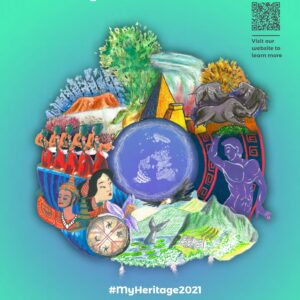
EdA Esempi di Architettura International Research Center together with UNESCO University and Heritage and coordinated by Olimpia Niglio organized a project in order to bring the younger generations closer to the theme of cultural heritage. The project is addressed to all schools in the world and to children between 5 and 17 years old. The first presentation of the project will be held in Lima (Peru) on July 31st. Other presentations will follow in Latin America and then move on to Asia and Europe. Everything is done through Webinars. The main languages of the project are: English, French, and Spanish (UNESCO languages)….
Docomomo International is pleased to announce that Footprint 26 is out now. This issue, edited by Jorge Mejía Hernández and Cathelijne Nuijsink, is dedicated to the theme “The Architecture Competition as Contact Zone: Towards a Historiography of Cross-Cultural Exchanges”. It includes research articles by Bénédicte Zimmermann; Bruno Gil, Susana Lobo and José Ribau Esteves; Carmela Cucuzzella; Jean-Pierre Chupin; Véronique Biau, Jodelle Zetlaoui-Léger and Bendicht Weber. This issue also includes review articles by Torsten Lange; Federico Ortiz; and Hamish Lonergan, as well as an interview with Sarah Williams Goldhagen. This issue of Footprint follows a double trajectory. On the one hand, it advances…
Docomomo International informs that the SUBLime network is currently looking for dedicated and highly motivated Early Stage Researchers (ESR), who will join our team to craft the future of lime mortars/plasters in new construction and conservation of the built heritage. They are recruiting 15 international PhD students to be trained as European experts in Sustainable Building Lime applications via Circular Economy and Biomimetic Approaches (SUBLime). SUBLime is an European Training Network (ETN) program that will start in February 2021, as a Marie-Sklodowska-Curie action (Innovative Training Network – ITN) involving 9 countries in Europe. This is an excellent opportunity to enhance your international career prospects: Original research…
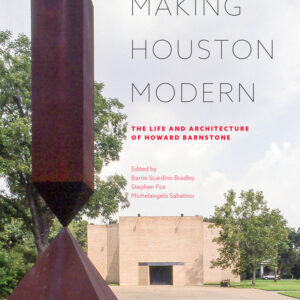
Complex, controversial, and prolific, Howard Barnstone was a central figure in the world of twentieth-century modern architecture. Recognized as Houston’s foremost modern architect in the 1950s, Barnstone came to prominence for his designs with partner Preston M. Bolton, which transposed the rigorous and austere architectural practices of Ludwig Mies van der Rohe to the hot, steamy coastal plain of Texas. Barnstone was a man of contradictions—charming and witty but also self-centered, caustic, and abusive—who shaped new settings that were imbued, at once, with spatial calm and emotional intensity. Making Houston Modern explores the provocative architect’s life and work, not only through…
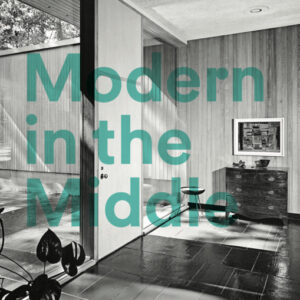
The first survey of the classic twentieth-century houses that defined American Midwestern Modernism. Famed as the birthplace of that icon of twentieth-century architecture, the skyscraper, Chicago also cultivated a more humble but no less consequential form of modernism–the private residence. Modern in the Middle: Chicago Houses 1929–75 explores the substantial yet overlooked role that Chicago and its suburbs played in the development of the modern single-family house in the twentieth century. In a city often associated with the outsize reputations of Frank Lloyd Wright and Ludwig Mies van der Rohe, the examples discussed in this generously illustrated book expand and enrich the…
Docomomo International wishes to convey the most sincere condolences at the passing of the Cambodian architect and researcher Yam Sokly, to his family and friends. “We have just lost a young architect and modern Cambodian architectural heritage advocate, Yam Sokly (速利任), on 28 June 2020. He received a bachelor’s degree from the Royal University of Fine Arts in Cambodia (2003-2009) and a master’s degree from Kyungmin University in Korea (2016). He was a staff of Heritage Mission at the Ministry of Culture and Fine Arts in Cambodia (2009-2012) and at the Royal University of Fine Arts (2012-2020), and worked as…
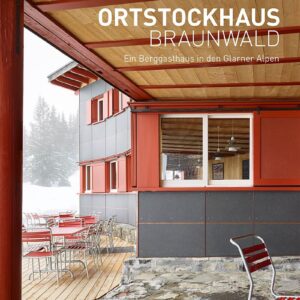
The Ortstockhaus auf der Braunwaldalp is one of the most important architectural witnesses of modernism in the canton of Glarus and is known as a destination far beyond the Glarus region. The richly illustrated book recognizes the Ortstockhaus as a pioneer of building in the mountains. In January 1930, the architect Hans Leuzinger (1887-1971) began planning the small sports house on a sun terrace in the Glarnerland region. The client was Peter Tschudi from Schwanden GL, who reacted with the project to the emerging tourism in the region. In a kind of welcome gesture, the building turns towards the Ortstock…