Despite the fact that the Sixth Biannual Conference of the European Architectural History Network, to be held in Edinburgh, was forced to be postponed from 2020 to 2021 due to the COVID-19 crisis, the network intends to regain its usual rhythm of holding conferences in even years, so it is already organising a Seventh pan-European meeting in Madrid for 2022. In accordance with the EAHN mission statement, this meeting aims to increase the visibility of the discipline; to foster transnational, interdisciplinary and multicultural approaches to the study of the built environment; and to facilitate the exchange of research results in the…

The heritage values of 20th century architecture, whether they be cultural, social or technical, remain relatively complex to assess, and thus to share, due to lack of perspective and knowledge. The architectural and urban production of the second half of the 20th century was particularly prolific, sometimes remarkable, even exceptional. The energy, ecological transition, the changing habits and lifestyles are leading to the gradual transformation of this built heritage reaching to the end of its life cycle. Today, many countries with a post-industrial economy are confronted with the challenge to bring about changes in these buildings and neighbourhoods in order…
“Universidad Europea de Madrid undertakes the mission to promote all types of research and in all fields. REIA applies this undertaking to the field of architecture research. REIA is involved in increasing dissemination of research to increase knowledge in the field of architecture as understood within the scope of cross-disciplinary knowledge, and dealing with the management of the physical and cultural complexity of the human-built environment. We intend to use this as an outlet for work that sits on the boundaries between disciplines. REIA is open to researchers, theoreticians, PhD students, historians, critics, to all architects and non-architects, and to…
Through time, the borders have been inherent to human life since many believes, knowledge and actions are founded through territorial occupation, and create basic forms of difference, but among the scales of organization, without a doubt, the State has been predominate. Up to now, a variety of studies have focused on the phases of the construction of borders; and even though during the Cold War there was a diminish in its numbers and varieties, since the last three decades there has been an emergence in its interest up to reaching a variety of topics and perspectives that can been characterized…
The magazine Docomomo Brasil (ISSN 2594-8601) invites researchers, students and professionals in the field of Architecture and Urbanism to send articles for its issues 6 and 7. The topic is free and the journal aims to disseminate research, documents, projects and bibliographic reviews in the area of documentation and preservation of the various manifestations of the Modern Movement. Articles may be submitted to the sections that make up the main body of the journal. In the Project section, it is intended to disseminate and discuss practical experiences in restoring buildings, sites and neighborhood units and other artistic expressions of the…
The Canadian Centre for Architecture (CCA) is launching a collaborative, multidisciplinary research project that explores the intersectional dimensions of digital design. Intersectionality entails a way of seeing and navigating a world with differential forms of justice. Pioneered by intellectuals and activists in the 1970s, from Kimberlé Crenshaw to the Combahee River Collective, it is rooted in gendered and racialized experiences of capitalism. Within the architecture discipline, an intersectional approach may foreground the under-acknowledged impacts the built environment has on, for example, Black or Indigenous peoples across the full spectrum of their lived experiences. In this regard, the CCA conceives of…
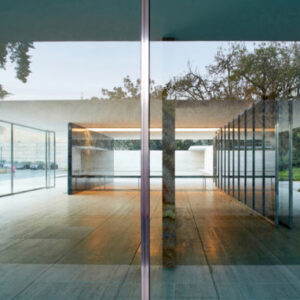
The Lilly Reich Grant for equality in architecture aims to support the study, dissemination and increasing the visibility of the contributions in the field of architecture which have been unduly relegated or forgotten due to discriminatory reasons. The grant also seeks to promote access in the equality of opportunities in architectural practice. This modality of the Lilly Reich Grant for Equality in Architecture is specifically addressed to the study, dissemination and visibility of Lilly Reich’s own contributions to the field of architecture. More information and the rules for applying are available on the Fundació Mies van der Rohe website.
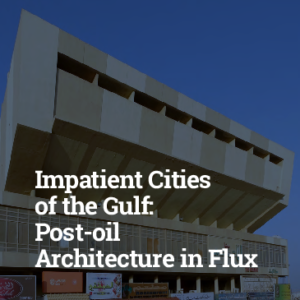
HPA Issue 8, Roberto Fabbri (University of Monterrey, MX) and Iain Jackson (University of Liverpool, UK) Today’s general perception of Gulf cities is based on the assumption of a futuristic vision; a visionary development and a cluster of hi-tech constructions. Since the striking of oil, this ‘brave new world’ has been a testing ground for experimental, risk imbued architecture and real estate. The sudden affluence and ambition of the rulers to demonstrate progress and social advancements (sometimes expressed through outlandish ‘iconic’ designs) has certainly fired this drive. The building of cities seemed an appropriate culvert for the vast funds generated, turning what…
The UIA, Urban Innovative Actions, has endorsed the collective letter and petition from 680 built environment experts from 51 countries addressed to the WHO, compelling public health leaders to adopt indoor environment best practices proven to mitigate the spread of COVID-19. Addressed to Dr. Tedros Adhanom Ghebreyesus, Director General of the World Health Organization (WHO), the collective letter urges the WHO to cooperate with built environment experts to develop guidance for integrated design and operation solutions for limiting COVID-19 exposure. Find out more and sign the petition here.
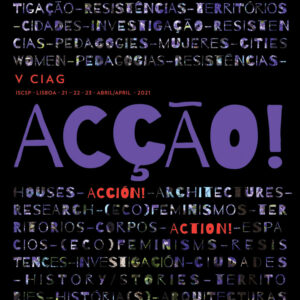
The V International Congress Architecture and Gender | ACTION. Feminisms and the spatialization of resistances continues the reflections organized since 2015 and mainly from southern Europe, enabling the construction of networks, research and transcontinental experiences. In this genealogy, with varied programs and themes, the previous congresses are ArquitectAs (2014, Seville), Matrices (2015, Lisbon), MORE (2017, Florence), and Fielding Architecture (2019, Brighton). The fifth edition emphasizes the political component of space and rights intersection, never forgetting the diversity of being a woman or a girl and the crossing with the current circumstances derived from the COVID-19 pandemic. In 1995, the Beijing Declaration and Platform for Action, adopted at IV World…