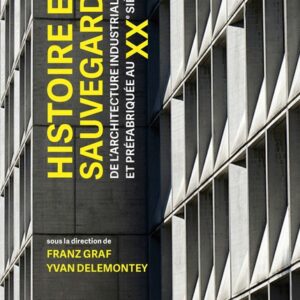
Histoire et Sauvegarde de L’Architecture Industrialisée et Préfabriquée au XXe Siècle

Architecture in the twentieth century, more than any other period in history, embodies the very idea of innovation in building. Its innovation embraces both the continued refinement of proven techniques as well as the introduction of new technologies – as often as not dependent on the logic of industrialised production which in itself would come to revolutionise the entire construction sector. How do we recapture the diversity and complexity of the century’s construction systems? How do we retain the evidence of its architectural and technical history? This study, while not claiming to be exhaustive in its treatment, explores the specifics…

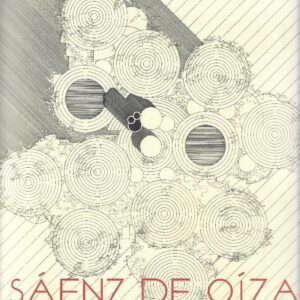
Sáenz de Oíza – Artes y Oficios

This catalogue documents the dialogues established in the rooms of the ICO Museum with one of the largest published compilations of plans and drawings by Sáenz de Oíza, with interesting introductory texts by the curators of the exhibition, the architects Javier, Vicente and Marisa Sáenz Guerra. Editor: Fundación ICO Language: Spanish Pages: 256 Price: 30 euro Date: 2020 ISBN: 978-84-948744-1-3 To order this book, please visit Museo ICO website.

Call for Abstracts: Curriculum for Climate Agency design (In)Action

Not all 1.5°C global heating scenarios are created equal. From the current ecogenocide of the global south to the 2020 Gini Index of global inequality, the climate crisis is an urgent one of development, equity and justice. The construction industry is responsible for 40% of global carbon emissions and architecture and other design professions have willingly, or unwillingly, sided with an uneven development that has consequences expanding from food insecurity and nutrient deficiency to imposed displacement due to collapsing ecosystems. Countries and communities that are least responsible are feeling the impact of the decisions made on the opposite side of…

Call for Proposals: Conversations on the Urban Implications and Experience of Epidemics

The Epidemic Urbanism Initiative (EUI) is pleased to announce a new series of conversations entitled “Conversations on the Urban Implications and Experience of Epidemics.” As part of this series, in recent months, we have been joined by leading scholars and practitioners from a range of disciplines–including public health, medicine, design, history, architecture, psychology, medicine, and many more–to begin articulating and reflecting upon the implications of the COVID-19 pandemic on urban life. These conversations have explored short- and long-term impacts of the pandemic and prolonged social distancing measures on work and workplaces; creative communities and cultural institutions; architectural education; built and…

Call for Submissions: Bitácora Arquitectura 46 – Digital Media and Architecture

The current pandemic has shown us that we live in a world that functions digitally, online; it has made clear the need to have access to digital tools. In times of isolation and social distancing, the digital has made it possible for us get close in ways that we had previously only ever imagined. In the nineties, the use of digital technologies rapidly expanded in architectural education and practice. There are few contemporary architectonic projects that do not use some type of digital tool during the design or construction stages, but their presence cannot be reduced to this. It is…

Call for Papers: TECHNOLOGY | ARCHITECTURE + DESIGN (TAD)

TECHNOLOGY | ARCHITECTURE + DESIGN (TAD) invites submissions of original research from scholars, practitioners, researchers, and students for consideration in the upcoming Intelligence issue. Intelligence resides between sensing and acting. Intelligence, through data-driven technology and virtual experimentation, drives the capacity and catalyzes learning, understanding, and applying knowledge through tacit, explicit, haptic, visual, human, and artificial forms. Through this broad understanding, intelligence need not be future-focused. For instance, indigenous science, biomimetics, and the complex intelligence inherent to informal settlements can inform artificial intelligence (AI) through robotic-assisted manufacturing, machine manipulation, and iterative, modification-based approaches in design. While these processes relinquish some agency to machines, they can also establish…

Call for Sessions and Round Tables: 6th Biannual Conference of the European Architectural History Network

Despite the fact that the Sixth Biannual Conference of the European Architectural History Network, to be held in Edinburgh, was forced to be postponed from 2020 to 2021 due to the COVID-19 crisis, the network intends to regain its usual rhythm of holding conferences in even years, so it is already organising a Seventh pan-European meeting in Madrid for 2022. In accordance with the EAHN mission statement, this meeting aims to increase the visibility of the discipline; to foster transnational, interdisciplinary and multicultural approaches to the study of the built environment; and to facilitate the exchange of research results in the…

Call for Papers: In Situ – “Heritage values of 20th century architecture: what recognition? Critical review and international forward-looking vision”

The heritage values of 20th century architecture, whether they be cultural, social or technical, remain relatively complex to assess, and thus to share, due to lack of perspective and knowledge. The architectural and urban production of the second half of the 20th century was particularly prolific, sometimes remarkable, even exceptional. The energy, ecological transition, the changing habits and lifestyles are leading to the gradual transformation of this built heritage reaching to the end of its life cycle. Today, many countries with a post-industrial economy are confronted with the challenge to bring about changes in these buildings and neighbourhoods in order…

Call for Papers: REIA17

“Universidad Europea de Madrid undertakes the mission to promote all types of research and in all fields. REIA applies this undertaking to the field of architecture research. REIA is involved in increasing dissemination of research to increase knowledge in the field of architecture as understood within the scope of cross-disciplinary knowledge, and dealing with the management of the physical and cultural complexity of the human-built environment. We intend to use this as an outlet for work that sits on the boundaries between disciplines. REIA is open to researchers, theoreticians, PhD students, historians, critics, to all architects and non-architects, and to…

Call for Papers “Border surveillance and control through architecture, infrastructure and landscape”

Through time, the borders have been inherent to human life since many believes, knowledge and actions are founded through territorial occupation, and create basic forms of difference, but among the scales of organization, without a doubt, the State has been predominate. Up to now, a variety of studies have focused on the phases of the construction of borders; and even though during the Cold War there was a diminish in its numbers and varieties, since the last three decades there has been an emergence in its interest up to reaching a variety of topics and perspectives that can been characterized…