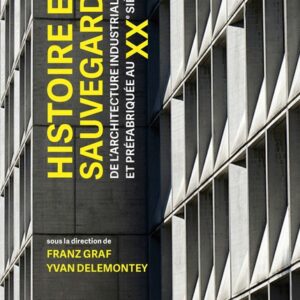
Architecture in the twentieth century, more than any other period in history, embodies the very idea of innovation in building. Its innovation embraces both the continued refinement of proven techniques as well as the introduction of new technologies – as often as not dependent on the logic of industrialised production which in itself would come to revolutionise the entire construction sector. How do we recapture the diversity and complexity of the century’s construction systems? How do we retain the evidence of its architectural and technical history? This study, while not claiming to be exhaustive in its treatment, explores the specifics…
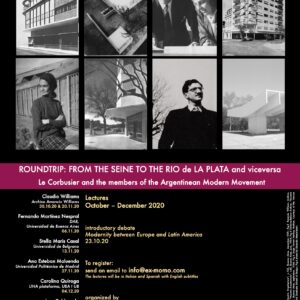
Eight weekly sessions, presented by international academics reflecting on some of the protagonists of the European and Latin American Modern Movement who trained or carried out part of their professional careers between the two continents. This project stems from some reflections on the Swiss master’s 1929 journey and on his relationship with Latin America, with which he established a bond through meetings, conferences and collaborations that lasted about three decades. The journey had a twofold outcome: on the one hand, it introduced new demands in the concept of architecture proposed by the first generation of the European Modern Movement, such…
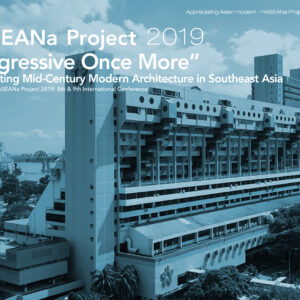
Docomomo International is pleased to announce the publication of the Report of mASEANa Project 2019: 8th & 9th International Conferences, mASEANa Project 2019: “Progressive Once More”, Rejuvenating Mid-Century Modern Architecture in Southeast Asia, edited by: mASEANa Project, by Docomomo Japan, 2020. “This is the most recent report from the mASEANa Project. The publication summarizes the mASEANa Project 2019: 8th & 9th International Conferences which were held between 31st October and 2nd November 2019 in Singapore and on 15th February 2020 in Tokyo, Japan, respectively. The eighth conference, in Singapore, took place in the Urban Redevelopment Authority Centre with three panels…
Docomomo International would like to congratulate the Institute of Aesthetic Research [Instituto de Investigaciones Estéticas] for the 85th anniversary. The Institute of Aesthetic Research of the National Autonomous University of Mexico, since its foundation, research has been carried out in its installations into the different forms of artistic expression in Mexico; the diversity of studies undertaken by the body of researchers in the fields of criticism, theory and history of art across a horizon that reaches other latitudes. It has thus become a space in which the plastic arts converge with dance, literature, photography, cinema and music. Every year, through…
The City Mayor of Bogota, Colombia has decided to demolish the Central tower of the Hospital San Juan de Dios, an iconic building of the healthcare modernist architecture in Latin America. The building its part of a healthcare complex with an eclectic architecture dating from 1918, this barbaric action it is an attempt to the architecture patrimony and exemplifies the lack of understanding and respect for the modern movement architecture in Bogota, Colombia. The history of the San Juan de Dios Institution start in 1603 when by Royal order of the Spain Kingdom the “San Juan de Dios Catholic Fraternity”…
This catalogue documents the dialogues established in the rooms of the ICO Museum with one of the largest published compilations of plans and drawings by Sáenz de Oíza, with interesting introductory texts by the curators of the exhibition, the architects Javier, Vicente and Marisa Sáenz Guerra. Editor: Fundación ICO Language: Spanish Pages: 256 Price: 30 euro Date: 2020 ISBN: 978-84-948744-1-3 To order this book, please visit Museo ICO website.
Not all 1.5°C global heating scenarios are created equal. From the current ecogenocide of the global south to the 2020 Gini Index of global inequality, the climate crisis is an urgent one of development, equity and justice. The construction industry is responsible for 40% of global carbon emissions and architecture and other design professions have willingly, or unwillingly, sided with an uneven development that has consequences expanding from food insecurity and nutrient deficiency to imposed displacement due to collapsing ecosystems. Countries and communities that are least responsible are feeling the impact of the decisions made on the opposite side of…
The Epidemic Urbanism Initiative (EUI) is pleased to announce a new series of conversations entitled “Conversations on the Urban Implications and Experience of Epidemics.” As part of this series, in recent months, we have been joined by leading scholars and practitioners from a range of disciplines–including public health, medicine, design, history, architecture, psychology, medicine, and many more–to begin articulating and reflecting upon the implications of the COVID-19 pandemic on urban life. These conversations have explored short- and long-term impacts of the pandemic and prolonged social distancing measures on work and workplaces; creative communities and cultural institutions; architectural education; built and…
The current pandemic has shown us that we live in a world that functions digitally, online; it has made clear the need to have access to digital tools. In times of isolation and social distancing, the digital has made it possible for us get close in ways that we had previously only ever imagined. In the nineties, the use of digital technologies rapidly expanded in architectural education and practice. There are few contemporary architectonic projects that do not use some type of digital tool during the design or construction stages, but their presence cannot be reduced to this. It is…
TECHNOLOGY | ARCHITECTURE + DESIGN (TAD) invites submissions of original research from scholars, practitioners, researchers, and students for consideration in the upcoming Intelligence issue. Intelligence resides between sensing and acting. Intelligence, through data-driven technology and virtual experimentation, drives the capacity and catalyzes learning, understanding, and applying knowledge through tacit, explicit, haptic, visual, human, and artificial forms. Through this broad understanding, intelligence need not be future-focused. For instance, indigenous science, biomimetics, and the complex intelligence inherent to informal settlements can inform artificial intelligence (AI) through robotic-assisted manufacturing, machine manipulation, and iterative, modification-based approaches in design. While these processes relinquish some agency to machines, they can also establish…