SYMPOSIUM THEME This year’s symposium will reflect on the architectural heritage of universities, their deployment for the activities of the institution, the potentials of these historic structures in fostering academic research and education, and the challenges they present to their owners. The sub-themes of the symposium are developed to encourage personnel from across the university – faculty, undergraduate and postgraduate, estate management, development office – to participate in discussion, debate and reflection. Architectural heritage as a pedagogical resource Historical architecture on campus are landmarks in the institution’s history; steeped in the collective memories of students across generations, they enhance the…

In a 1995 article on the renewal of architectural criticism, French architect and critic Bernard Huet referred to Charles Baudelaire to define art criticism as necessarily – in the poet’s words – “partial, impassionate, political”. During the 1990s, perhaps as a reaction to the 1980s, when in many specialized publications architectural criticism was identified as “communication” or even as promotion of architects and architectures, it emerged an extensive nostalgia for a notion of criticism associated to the historical avant-gardes. In this “committed” criticism or in the “politicized” one it was possible to emphasize the critic’s influential and active role in…
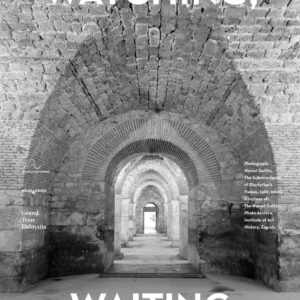
The Institute of Art History – The Cvito Fiskovic Centre in Split calls for papers for an international conference of academics and professionals: “Watching, Waiting – Empty Spaces and the Representation of Isolation”. Across the globe, the year 2020 was unexpectedly marked by the COVID-19 pandemic. Photographs of empty public spaces – the locations of historic events, celebrations, protests, social gatherings, crowds of tourists – from Milan, Paris, London, Istanbul, and Hong Kong to Dubrovnik and Split… these sights stir up bittersweet emotions. On the one hand, these pictures are intensely beautiful. They recall artist’s books and historical photographer’s monographs…
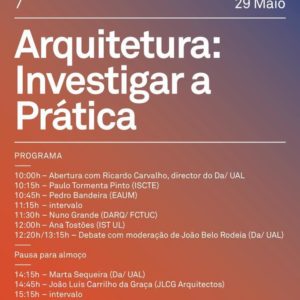
Docomomo International is pleased to announce the colloquium “Arquitectura: Investigar a Prática” [“Architecture: Investigating the Practice”] with the participation of Ana Tostões, Bárbara Silva, João Luís Carrilho da Graça, João Belo Rodeia, Marta Sequeira, Nuno Grande, Paulo Tormenta Pinto, Pedro Bandeira e Xavier Monteys. The colloquium is organized by the The Architecture Department of the Universidade Autónoma de Lisboa. and will be happening next Friday, May 29, 2020, at 10:00 a.m. (GMT + 1) with the assistance of the Zoom platform (https://videoconf-colibri.zoom.us/j/94086081397). To know more about the UAL’s online conferences, go to the website.
Docomomo Iran shared with Docomomo International good news regarding the protection of a town that was started to be built in 46 years ago in Iran. The Shushtar New Town, a modern – but contextual – city in the southwest of Iran, in of Iran, which was under threat for some demolitions, now is registered on the Iranian National Heritage List. The Shushtar New Town was designed by the Iranian architect, Kamran Diba (1937-), and started to be built in 1974. It follows the traditional urban pattern of Iranian cities with an interwoven urban fabric and (mud)brick as construction material. This…
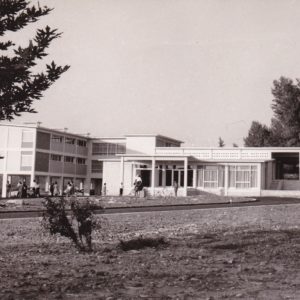
Docomomo International became aware by Docomomo Greece that the Xenia hotel in Arta, an important modern site, is under threat. Xenia Hotel in Arta (1958) was designed by architect Dionysis Zivas (1928-2018), a Professor at NTU Athens’s School of Architecture since the 1970s, Dean of the School for many years, and a renowned scholar in the field of architectural heritage (Europa Nostra medal, Gottfried von Herder Preis etc.). The hotel was built inside the Byzantine fortress of the city, which then functioned as a prison. In addition to the small and discreet 40-bed hotel, the design included a new small…
Docomomo International wishes to convey the most sincere condolences at the passing of the professor and historian of Spanish art, Antonio Bonet Correa, to his family and friends. Antonio Bonet Correa (La Coruña 1925-Madrid 2020), was one of the most distinguished figures in the conformation of art history in Spain if not its inventor. He was a handsome man, distinguished-looking, a little French in taste and form; he had a shrewd sense of humor and a capacity for storytelling that captivated those willing to go beyond what was expected in the second race. Professor Bonet, Don Antonio – as the…
Docomomo International regrets to inform that the National Theatre of Albania in Tirana has been demolished by the opportunistic politics of the government of Albania. The National Theatre of Albania was exposed as an Architecture in Danger where Docomomo International opened a worldwide alert regarding threatened Modern Movement heritage in Tirana, Albania. In the Architectuul‘s Forgotten Masterpieces – FOMA number 35, Saimir Kristo discussed how the municipality of Tirana and socialist governments tried to demolish and replace the theatre with new high rise profitable developments: “This is not just the fall of a building designed by Giulio Berte in 1939, part of the architectural and…
The symposium entitled “1989, hors-champ de l’architecture officielle. Des petits mondes au Grand” is organized by the ACS, Architecture, Culture Société/UMR AUSser 3329 Laboratory and will be held on 27 and 28 November at ENSA, Paris Malaquais. The team is asking for contributions from researchers, teachers and practitioners in architecture and in social sciences. Proposed communications should be submitted by 29 June 2020. Bellow is the call for communications and its practical arrangements. For the symposium to take place in the best possible conditions, it may be postponed in the view of the current health situation. Deadline for submitting propositions: 1st…
Docomomo Brazil shared with Docomomo International the letter concerning the future of the National Historic and Artistic Heritage Institute (IPHAN). “The FORUM OF ENTITIES IN DEFENSE OF THE BRAZILIAN CULTURAL HERITAGE, comprising several social entities that gather professionals and researchers from different areas engaged in preserving cultural heritage, together with IPHAN Council Members Representatives of the Civil Society, and IPHAN former Presidents, expresses its concern with the Brazilian Government’s actions on the National Historic and Artistic Heritage Institute (IPHAN). Since 2016 and, more critically, after the beginning of the current Brazilian government, in 2019, Brazil underwent a period of many…