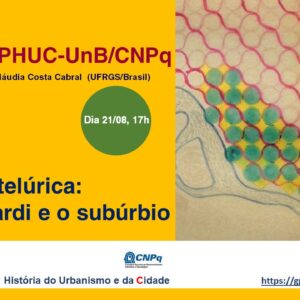
Docomomo International is pleased to announce the GPHUC Tertulias. The proposal is to create a (virtual) space for the dissemination of knowledge in urban history through the realization of conferences and presentations by researchers from Brazil and other countries. In this same sense, to spread the knowledge of Urban History produced at Universities to a wider audience. Disseminate studies on the history of cities, history of urbanism / urban-regional planning, which, in the vast majority, end up limited to professionals working in Universities and Research Institutions. Today, 21 August 2020 at 5 p.m. (GMT -3), the Tertulia “Paisagem telúrica –…
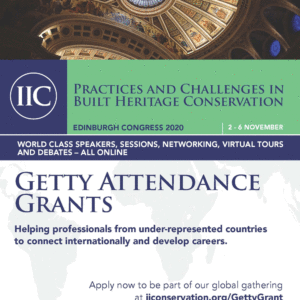
The International Institute for Conservation of Historic and Artistic Works is encouraging attendance in the IIC Edinburgh Congress “Practices and Challenges in Built Heritage Conservation” from conservators and cultural heritage professionals from all over the world and for those who are at different stages of their career including students and early career professionals. Details of grants currently available are listed below. Anna Plowden CPD Grants Anna Plowden Trust is supporting a CPD grant to cover the full cost of IIC membership for one year for practicing conservators based in the UK, enabling recipients to attend the IIC Edinburgh Congress online…
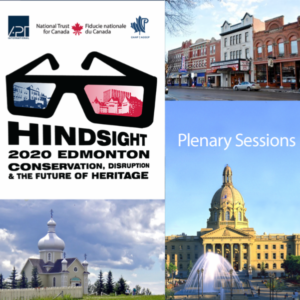
HINDSIGHT 2020 will explore heritage conservation’s disruptive role in a 21st century defined by resource scarcity, climate change and sustainability. In an era seeking heroic solutions, historic preservation provides transformative ideas, highlighting the importance of adaptation, minimal intervention, reversibility and maintainability. While Edmonton is the research, refining, and manufacturing heart of the Canadian oil industry, it is also a hotbed of environmental innovation and activism. HINDSIGHT 2020 will be hosted by a vibrant historic city at the very forefront of the climate crisis, one wrestling with its petroleum legacy and the imperative to transition to a low-carbon future. Building on…
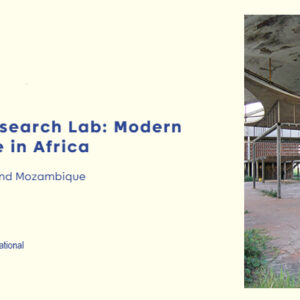
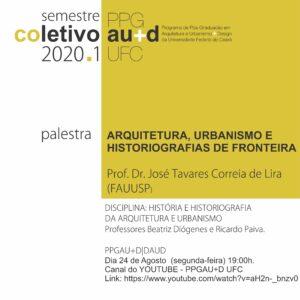
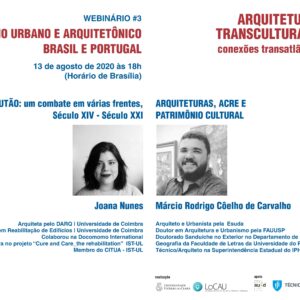
On the 13 of August 2020 at 6 p.m. (GMT -3), the second webinar “Architecture and Transculturation event: transatlantic connections | 2020” of LoCAU (Laboratory of Criticism in Architecture, Urbanism and Urbanization) will take place. The initiative is organized by the PhD in Architecture and CITUA (Center for Innovation in Territory, Urbanism and Architecture), in partnership with the Instituto Superior Técnico, University of Lisbon (IST-UL). These webinars aim to promote and disseminate the debate on a thematic of transculturation in Architecture and Urbanism between Brazil, Europe and Africa. There will be five webinars, with speakers from Brazil, Europe and Africa….
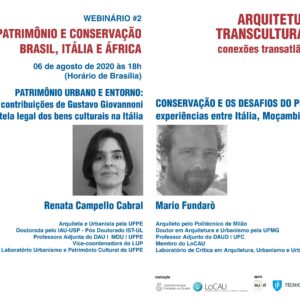
On the 6 of August 2020 at 6 p.m. (GMT -3), the second webinar “Architecture and Transculturation event: transatlantic connections | 2020” of LoCAU (Laboratory of Criticism in Architecture, Urbanism and Urbanization) will take place. The initiative is organized by the PhD in Architecture and CITUA (Center for Innovation in Territory, Urbanism and Architecture), in partnership with the Instituto Superior Técnico, University of Lisbon (IST-UL). These webinars aim to promote and disseminate the debate on a thematic of transculturation in Architecture and Urbanism between Brazil, Europe and Africa. There will be five webinars, with speakers from Brazil, Europe and Africa….
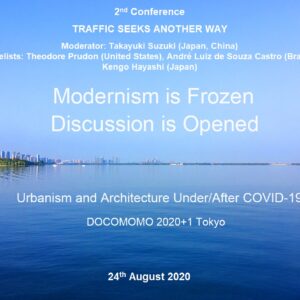
Following the first discussion “How do you map modernism under/after COVID-19”, which counted with the participation of Dr. Takayuki Suzuki, Dr. Ana Tostões, Dr. Shin Muramatsu and Dr. Yoshiyuki Yamana, the second session of “Is Modernism Frozen?” will happen on 24th August 2020 with the theme “Traffic seeks another way”. Moderator Takayuki Suzuki (Japan, China) Panelists New York: Theodore Prudon (United States) Brazil: André Luiz de Souza Castro (Brazil) Japan: Kengo Hayashi (Japan) Topics: Docomomo International Public Discussion #02 Date and Time: 24 August 2020, 10 PM Japan / 9 AM New York / 10 AM Brasilia / 2PM GMT…
The Docomomo São Paulo Nucleus and the stricto sensu Graduate Program in Architecture and Urbanism at the São Judas Tadeu University invite you to participate in the 7th Docomomo São Paulo Seminar. This event will continue the activities of seminars developed by the Docomomo São Paulo Nucleus, resumed in 2017, when the 5th Docomomo São Paulo Seminar was held in the capital, organized in collaboration with the Faculty of Architecture and Urbanism of the Mackenzie Presbyterian University (FAU- UPM). That seminar was followed, in 2018, by the 6th Docomomo São Paulo Seminar, promoted jointly with the Institute of Architecture and…
International Symposium, organized by GERPHAU Lab (philosophy, architecture, urban world, EA 7486 Ecole Nationale Supérieure d’Architecture de Paris-La Villette) and the ARENA Association. Paris, 11-12 March 2021 No one knows what the real consequences for habitat, climate change and the degradation of the biosphere will be in the next fifteen, thirty or fifty years. But the disasters are already there. Whole neighborhoods collapse and their inhabitants are drowned, burned, swept away, suffocated by physical phenomena that clash with human settlements. New threats are intensifying. The recent Covid-19 pandemic also highlights the toxic synergies that are woven between pressures on natural…
“But what is the story of all of the Americas if not the chronicle of the marvelous and the real?”, wrote Cuban author Alejo Carpentier in the preface of The Kingdom of This World ([New York: Farrar, Straus and Giroux], 2017: [page: xx]). This rhetorical question firmly resonates when studying Surrealism in Latin America. Scholars have given significant attention to the idea of the marvellous in visual arts and literature to define the inventions and reinventions of Surrealism in the New World. However, we could also rethink the marvellous in relation to the utopian impulse and discourses that have shaped the…
This panel explores the proliferation of artistic practices addressing medical and health-related subjects, both within and outside of traditional systems of art production and display. As well as the increasing prevalence of medical themes in the work of individual artists, contemporary art is now called on to interpret, communicate and produce health-related knowledge in academic research, medical museums and medical environments. The intersections between contemporary art and medicine have received little critical attention (to date, most work on art and medicine has focused on the 19th and early 20th centuries). As Jordanova notes, “we lack a basic map” of “the…