Oslo’s Y-block with Murals by Picasso demolished

The Norwegian Government has decided to demolish one of its most important modernist monuments. A monument by the architect Erling Viksjø, with contributions by Carl Nesjar and Pablo Picasso. A monument that survived a terrorist attack in 2011 and remained structurally sound. A monument of European importance that must be saved. We are talking about the Y-block from 1969 which forms together with the H-block from 1958 the modernist contribution to the government quarter of Oslo. Just before the attack in 2011, both buildings were about to be granted protection by the Directorate of Cultural Heritage. Experts, inside and outside…

Guide to Architecture of the University City of 1952

Book review by Alejandrina Escudero The Guide to Architecture of the University City of 1952, published by the Instituto de Investigaciones Estéticas de la Universidad Nacional Autónoma de México, UNAM, deals with one of the most notorious urban complexes of the 20th century in Mexico. Located to the south of Mexico City, on a bed of volcanic lava, its construction represented not only an architectural landmark but a true transformation of the educational community, influencing decisively the new generations of students and the country’s destiny. The University City was adjusted to master plan, by Mario Pani and Enrique del Moral,…

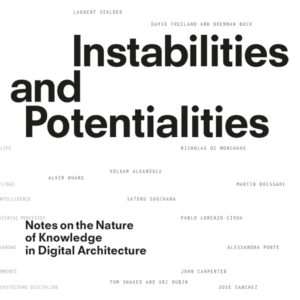
Instabilities and Potentialities. Notes on the Nature of Knowledge in Digital Architecture

Book review by Matthew Allen It is an odd book that begins by suggesting that we read another book, but there it is, in the fourth sentence: Georges Teyssot exhorting us to buy the recent translation of Gilbert Simondon’s early masterwork, On the Mode of Existence of Technical Objects, originally published in French in 1958 (viii). Here we find in miniature the conundrum at the heart of what has been called “digital architecture” for the past thirty years: computational techniques have proliferated even as their original philosophical raison d’être has languished. As Mario Carpo argued in The Alphabet and the…

Carlo Scarpa. Casa Zentner a Zurigo: una villa italiana in Svizzera [Carlo Scarpa. Zentner house in Zurich: an Italian villa in Switzerland]

“The volume, published for Electaarchitecture, illustrates and documents the ‘micro-history’ of Casa Zentner in Zurich, the only building built by Carlo Scarpa outside Italy. Casa Zentner was conceived and built between 1963 and 1969 for Savina and René Zentner. Savina Rizzi, architecture superintendent and art collector, is among the most assiduous patrons of Carlo Scarpa since the 1950s. After following Frank Lloyd Wright’s project for the palace on the Grand Canal in Venice at a very young age, requested by the architect Angelo Masieri, her first husband who died prematurely, Savina will entrust Scarpa with various tasks including, in 1953-1954,…

TEMPORÁNEA. Revista de Historia de la Arquitectura

The Comité de Dirección of the TEMPORÁNEA. Revista de Historia de la Arquitectura is pleased to announce the publication of the first issue. TEMPORÁNEA. Revista de Historia de la Arquitectura builds an international forum in the field of Architecture History. Filling the existing gap of specialized publications in this matter in Spain, the journal has a marked international character, which translates both into the active participation of international experts in its bodies and the research published in it. Research in the History of Architecture is approached from any discipline, chronological period and geographic scope, and promotes the diversity and complexity of…

Habiter au XXIe siècle les édifices des années 1950-1970 [Living in the buildings of the 1950s and 1970s in the 21st century]

The BRAUP and the ENSA of Saint-Étienne are pleased to present the summary of the symposium “Habiter au XXIe siècle les édifices des années 1950-1970” which was held in Firminy in the house of Culture of Le Corbusier, November 15 and 16, 2018. General presentation of the research program The built heritage inherited from the 20th century, more particularly that built after 1945, constitutes a major part of the fabric of our cities. It presents a great typological and constructive diversity which makes it possible to envisage multiple adaptation, transformation, restoration, recycling and reuse strategies. It is an important source…

Cure and Care
Investigation into healthcare facilities involves dealing with multiple spheres beyond the technological, physical and psychological. Nowadays, the growing emphasis on wellbeing goes beyond the seminal ideas that modern buildings were cleansing machines, or that modern architecture and urbanism were shaped by bacteria. Presenting some stimulating philosophically-orientated essays, this journal makes a link between the Modern Movement and what we have entitled the “Cure and Care” concept, connecting health and the environment, body and design. Considering healthcare buildings and their role in the welfare policy of societies, the discussion addresses future challenges, driven by developments in technology and medicine, envisaging a key role for healthcare facilities in ensuring a sustainable built environment.
see full text

Plečnik Stadium

Docomomo International became aware of one of Ljubljana Modern’s masterpieces, the Plečnik Stadium, to be under immediate and serious threat of negligence due to the yet unrealized project of a new modern sport complex, the Bežigrad Sports Park (BSP) including a large-scale construction of skyscrapers, office buildings and underground storeys, ultimately leaving the heritage site in an extreme risk situation. The Bežigrad Stadium (today better known as Plečnik Stadium) was constructed in 1935 according to the ideas and plans of architect Jože Plečnik (1872 – 1957), who is considered the builder of modern Ljubljana and also the most influential Slovenian…

Call for applications: Editorial Board of Architectural Histories

Architectural Histories invites applications for three new members to join its editorial board. Members of the editorial board work with the editor-in-chief to guide potential contributions, from submission through peer review and copyediting stages of publication. Members thus carry considerable responsibility for the content and quality of the journal. The board, in keeping with the European Architectural History Network’s mission, also develops the strategy and vision of the journal, maintaining its disciplinary, thematic and geographic diversity and outreach whilst upholding scholarly excellence and integrity. Members should be available and committed, willing to devote considerable time to the journal (a minimum of two…

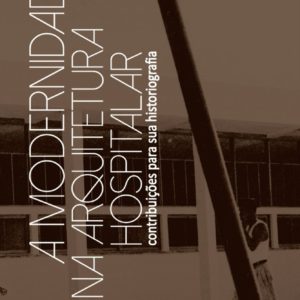
A Modernidade na Arquitetura Hospitalar [Modernity in Hospital Architecture]

Book Review by Renato Anelli, published in: docomomo Journal 62 – Cure and Care (2020) ISSN 1380/3204. This book presents the history of hospital architecture. A Modernidade na Arquitetura Hospitalar [Modernity in Hospital Architecture] offers the reader a consistent introduction to the history of health facilities architecture, enabling the understanding of its transformations together with those of medicine. Two moments can be highlighted. The first one is when there was the application of the typology of horizontal pavilions apart from each other and distant from the cities to comply with the medical strategy to isolate the sick. The emergence of…