The Docomomo São Paulo Nucleus and the stricto sensu Graduate Program in Architecture and Urbanism at the São Judas Tadeu University invite you to participate in the 7th Docomomo São Paulo Seminar. This event will continue the activities of seminars developed by the Docomomo São Paulo Nucleus, resumed in 2017, when the 5th Docomomo São Paulo Seminar was held in the capital, organized in collaboration with the Faculty of Architecture and Urbanism of the Mackenzie Presbyterian University (FAU- UPM). That seminar was followed, in 2018, by the 6th Docomomo São Paulo Seminar, promoted jointly with the Institute of Architecture and…
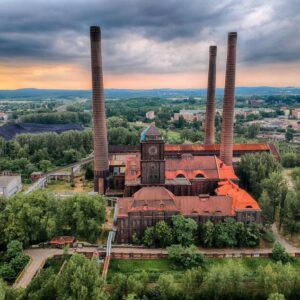
Docomomo International is now appealing to your foremost interest and concern regarding the situation of the Szombierki Power Plant in Bytom, established in 1920. “The ‘cathedral of industry’, designed by the Zillmann brothers (Georg and Emil), is still an impressive symbol of the Industrial Revolution. This Modernist power plant, with huge potential for reuse and locally registered as a monument, is threatened by the risk of demolition. Szombierki operated for almost 80 years and was one of the last hard-coal powered electric power plants in Europe. Over the past two decades, the building has been empty. Despite several attempts to…
International Symposium, organized by GERPHAU Lab (philosophy, architecture, urban world, EA 7486 Ecole Nationale Supérieure d’Architecture de Paris-La Villette) and the ARENA Association. Paris, 11-12 March 2021 No one knows what the real consequences for habitat, climate change and the degradation of the biosphere will be in the next fifteen, thirty or fifty years. But the disasters are already there. Whole neighborhoods collapse and their inhabitants are drowned, burned, swept away, suffocated by physical phenomena that clash with human settlements. New threats are intensifying. The recent Covid-19 pandemic also highlights the toxic synergies that are woven between pressures on natural…
A special issue of Architectural Theory Review (vol. 25, no. 1), edited by Irina Davidovici (ETH Zürich) and Laila Seewang (Portland State University) The residual associations that timber architecture maintains with tradition, local culture and manual craft have long been challenged by its global ubiquity. This inner contradiction was already visible in the paradox of 1920s timber modernism: a locus of tangible tensions between universal commodity and regional culture, enmeshing mythical nation-building with entirely pragmatic rationales. Unlike steel or concrete, other materials quintessentially bound up with modernity, timber has widely been perceived as a corrective to modernism. As an organic, living material, it demands a…
Docomomo International wishes to convey the most sincere condolences at the passing of the Spanish professor, researcher and architect Fernando Álvarez Prozoróvich, to his family and friends. On April 3, the architect Fernando Álvarez Prozoróvich died in Barcelona, at the age of 67, as a victim of the coronavirus pandemic. He was born in Bahía Blanca, Argentina in 1952 and completed his undergraduate studies at the Facultad de Arquitectura y Urbanismo – Universidad Nacional de la Plata, graduating in 1978. During the 1980s he settled in Barcelona where he pursued a brilliant career as a professor, researcher and specialist in…
“But what is the story of all of the Americas if not the chronicle of the marvelous and the real?”, wrote Cuban author Alejo Carpentier in the preface of The Kingdom of This World ([New York: Farrar, Straus and Giroux], 2017: [page: xx]). This rhetorical question firmly resonates when studying Surrealism in Latin America. Scholars have given significant attention to the idea of the marvellous in visual arts and literature to define the inventions and reinventions of Surrealism in the New World. However, we could also rethink the marvellous in relation to the utopian impulse and discourses that have shaped the…
This panel explores the proliferation of artistic practices addressing medical and health-related subjects, both within and outside of traditional systems of art production and display. As well as the increasing prevalence of medical themes in the work of individual artists, contemporary art is now called on to interpret, communicate and produce health-related knowledge in academic research, medical museums and medical environments. The intersections between contemporary art and medicine have received little critical attention (to date, most work on art and medicine has focused on the 19th and early 20th centuries). As Jordanova notes, “we lack a basic map” of “the…
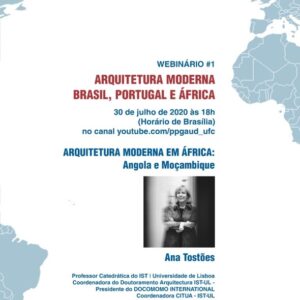
Professora Ana Tostões, chair of docomomo International, participated on the initiative “Architecture and Transculturation event: transatlantic connections | 2020” of LoCAU (Laboratory of Criticism in Architecture, Urbanism and Urbanization) and, in this edition, in partnership with the PhD in Architecture and CITUA (Center for Innovation in Territory, Urbanism and Architecture), Instituto Superior Técnico, University of Lisbon (IST-UL). These webinars aim to promote and disseminate the debate on a thematic of transculturation in Architecture and Urbanism between Brazil, Europe and Africa. There will be five webinars, with speakers from Brazil, Europe and Africa. The webinars will take place every Thursday from…
The experimentadesign presents its most recent program: the Design Foundation for Women and Crafts, an international initiative dedicated to the preservation, innovation and dissemination of handicrafts practice developed by women. In the era of widespread production and consumption and high technology, it is urgent to preserve manual knowledge – particularly that which actively contributes to the social cohesion of the communities in which it operates, which is closely linked to the sustainable management of planet’s resources and the preservation of a unique historical and cultural heritage. Already fragile, isolated, aged and, in many cases, endangered, artisan communities are risk groups…
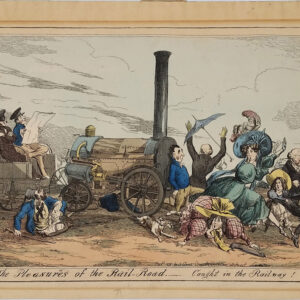
The European Commission has proposed declaring 2021 the European Year of Railways because next year one will celebrate a number of important anniversaries for rail: the 20th anniversary of the EU’s first railway package, the 175th anniversary of the very first rail link between two EU capitals (Paris-Brussels), as well as 40 years of TGV and 30 years of ICE. The main objective of the European Commission is to contribute to the achievement of the objectives of the European Green Deal in the field of transport. A series of events, campaigns and initiatives will promote rail as a sustainable, innovative and safe…