Modern Architectures. The Rise of Heritage

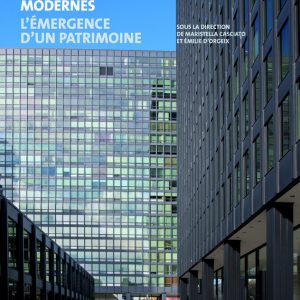
This book is a collaborative work containing 18 essays, related to examination and preservation of modern architecture. From the publisher: “(…) essays offer a variety of fresh and thoughtful perspectives on how to examine our modern architectural heritage, considering both its local and international significance. Collectively, they provide a comprehensive overview of preservation activities and teaching programs around the world that have developed in this field since the 1980s, including new research and insights that have radically changed the canonical vision of modern architecture. The essays reveal how knowledge has opened up new areas of preservation and lead to deeper,…

100 Buildings 1900-2000

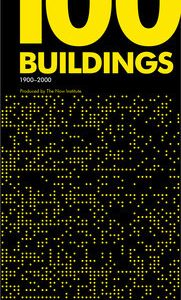
The twentieth century was a remarkable period in architectural history. Rivaling the transformative achievements of ancient Greece, the Gothic period the Renaissance, the twentieth century galvanized radical developments in building technology, architectural theory, and space that paralleled global revolutions in politics, economics, and social values. Knowledge of the twentieth century´s accomplishments is fundamentally critical for all students of architecture. More the 50 internationally renowned architects were asked to list the top 100 twentieth-century buildings they would teach to architecture students. The contributors were encouraged to select built projects where formal, special, technological and organizational concepts responded to dynamic historical, cultural,…

Moholy´s Edit. The Avant-Garde at Sea, August 1933

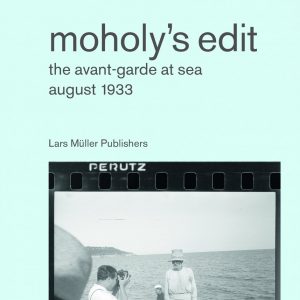
The book concerns the four-day cruise to the Aegean islands made by the “inner circle” of the International Congress of Modern Architecture (CIAM) and their friends during the 4th congress in August 1933. Structured around that sequence of Moholy-Nagy´s film Architects´ Congress dealing with the cruise, the book sheds light on this legendary event in the history of the European architectural and artistic avant-garde. Together with a close study of Le Corbusier´s sketches and notes in his carnet B5, all of these documents (and even more)—compiled by the authors with utmost care—reveal the preoccupations of the key personae including Sigfried…

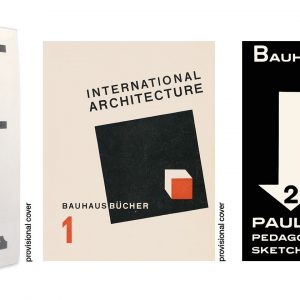
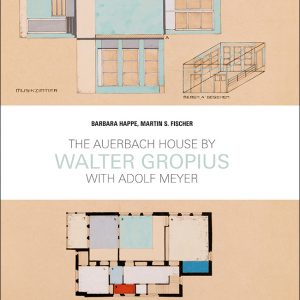
The Auerbach House by Walter Gropius with Adolf Meyer

While Director of the Bauhaus, Walter Gropius built the Auerbach House in 1924, his first private house in the Bauhaus mode. Thus, this in cooperation with Adolf Meyer created building is one of the most important milestones for the early years of the Bauhaus. Certainly, the most outstanding feature of the house is the authentic interior color scheme. It was first discovered during the restoration that Alfred Arndt designed color schemes for every interior wall. Preserving almost all original details, today the house glows again with the 37 original pastel tones. This book also recounts the moving story of the…

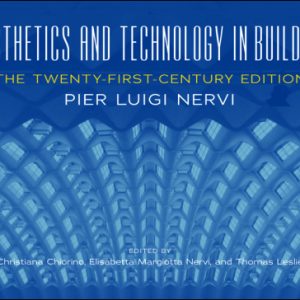
Aesthetics and Technology in Building. The Twenty-First-Century Edition

Rome, Italy – The selection of Italian engineer and master builder Pier Luigi Nervi (1891-1979) to present the 1961 Charles Eliot Norton Lectures in Poetry at Harvard University was a breathtaking moment in the history of engineering and architecture. Often called a “poet in concrete” for his stunning, web-like roof structures and evocative, curving concrete structures, Nervi represented the growing optimism around technology and design in the postwar era. In four lectures, the designer and builder of internationally acclaimed arenas for the 1960 Rome Olympics covered the history of building, showing how art and science had found common ground in construction…

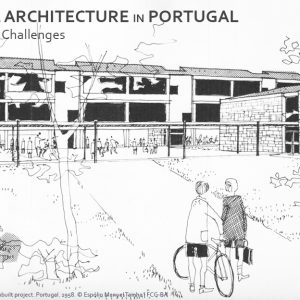
Call for Papers: Educational Architecture – Education, Heritage, Challenges

We are pleased to invite you to participate in a three-day international conference Educational Architecture – Education, Heritage, Challenges that will be held in Fundação Calouste Gulbenkian in Lisbon, Portugal, on May 6-8, 2019. This international conference is organised by a group of researchers from the University of Lisbon and the University of Coimbra, Portugal, under the scope of the research project ´Atlas of School Architecture in Portugal – Education, Heritage and Challenges´, funded by FCT, the agency that supports research into science and technology in Portugal. Educational Architecture – Education, Heritage and Challenges is intended to be a forum for discussing the…

Docomomo Suomi Finland – Kohdevalikoima Register Selection

The book highlights 87 masterpieces of Finnish Modernism by articles written by 30 Finnish specialists. The book is completely bilingual in English and Finnish. The sites in the new catalogue are categorised on a temporal and thematic basis. The order of entries progresses from the breakthrough of Functionalism to the post-war reconstruction era, the construction of the welfare state, and the stages of urbanisation culminating in the 1980s. After long deliberation, the selection was complemented with sites that tested the limits of strict Modernism – thus emulating the first selection which included organic, unorthodox and multi-formed buildings. To buy the…

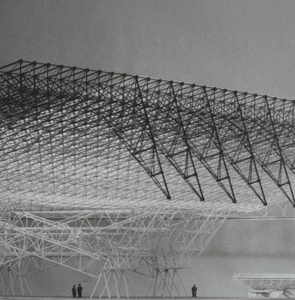
Konrad Wachsmann and the Grapevine Structure

German modernist architect Konrad Wachsmann (1901–80) had a career-spanning interest in construction processes—in particular the prefabrication of building components and their assembly within modular systems. In this respect, Wachsmann was a pioneer whose ideas and work paved the way for today´s industrialized construction. Marianne Burkhalter and Christian Sumi synthesize years of careful research into a compelling look at this highly creative architect. At the core of the book is Wachsmann´s dynamic Grapevine Structure, a universal construction element developed with students during his tenure at the Chicago Institute of Design—part of what is today the Illinois Institute of Technology. The book…

Invisible Cities – Machinami – Japanese urban landscape

Pierre-Jean Giloux´s first monograph, the publication extends the eponymous video tetralogy inspired by the Japanese utopian architectural movement: Metabolism (1960-70). The films of the Invisible Cities cycle are portraits of Japanese cities, superimposing filmed and photographed images of everyday, social and urban reality, with virtual images. The book explores the links that connect four Japanese cities with a rich architectural past (Tokyo, Yokohama, Osaka, Kyoto). This journey through Japan´s Megapolis traces the history of Japan and ends with the reconstruction of pavilions for the Osaka 70 Universal Exhibition and a virtual proposal for a smart city on the waters of Lake Biwa….

Call for Abstracts: 16. Docomomo Germany Conference & RMB Final Conference

DOCOMOMO Deutschland, the Detmold School of Architecture and Interior Architecture and the project ‘Reuse of Modernist Buildings (RMB)’ invite you to the 16th DOCOMOMO Germany & RMB Conference. This first event in Berlin on the 1st of March 2019 at the Akademie der Künste continues the tradition of the Karlsruhe DOCOMOMO Germany Conferences. The EU project RMB initiates a pedagogical framework on the European level based on common definitions, methods, and approaches for the ´reuse´ of modern buildings, with the aim of offering a ´Joint Master on Reuse of Modernist Buildings´. In this context, the conference will take place in…