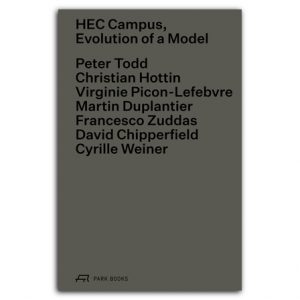
HEC Campus, Evolution of a Model

HEC Paris is a leading European school of advanced business studies with a global community of students from Europe, North and South America, Asia, Africa, and the Middle East. In 2012, HEC Paris’s campus near Versailles was redesigned by renowned architects Martin Duplantier and David Chipperfield to reflect the school’s global character and its focus on open communication and exchange. This new book documents the HEC Campus’s transformation in close detail and richly illustrated, including a newly commissioned photo essay by award-winning French photographer Cyrille Weiner. It takes readers through the planning and construction of its modern buildings, designed by René Coulons, throughout the…

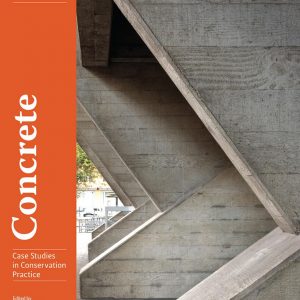
Concrete – Case Studies in Conservation Practice

This timely volume brings together fourteen case studies that address the challenges of conserving the twentieth century’s most ubiquitous building material—concrete. Following a meeting of international heritage conservation professionals in 2013, the need for recent, thorough, and well-vetted case studies on conserving twentieth century heritage became clear. This book answers that need and kicks off a new series, Conserving Modern Heritage, aimed at sharing best practices. The projects selected represent a range of building typologies, uses, and sizes, from the high-rise housing blocks of Le Corbusier’s Unité d’Habitation and public buildings such as London’s National Theatre to small monuments like the…

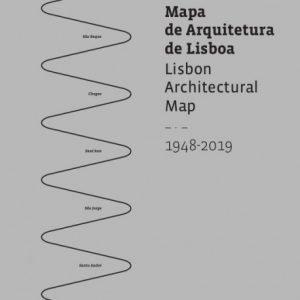
Book lauching: Lisbon Architectural Map 1948-2019

The publisher A + A Books will launch the Lisbon Architecture Map 1948 – 2019, to follow the changes that have arisen in the city up to the present time. A + A publisher explains that since 2013, the year of publication of the Lisbon Architecture Guide 1948-2013, numerous changes have occurred in the city: increase of cultural equipment or interventions in collective spaces, for example. The publisher explains that the choice of the date 1948 as the temporal beginning of a modern and contemporary Architectural Map refers to the year of the 1st National Congress of Architects in Lisbon,…

Call for Papers: Joelho nº10: Team 10: Debate and Media in Portugal and Spain

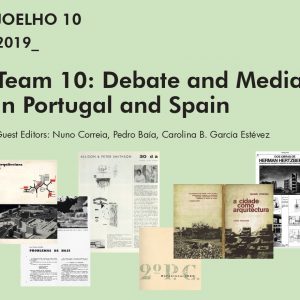
Guest Editors: Nuno Correia, Pedro Baía, Carolina B. García Estévez   For issue nº10, the journal Joelho will be published in association with the International Conference “Team Ten Farwest: Critical Revision of the Modern Movement in the Iberian Peninsula, 1953-1981”, which will be held in FAUP – Porto University School of Architecture, in 28-30 November 2019 — the year that marks the 60th anniversary of the last CIAM Meeting of 1959, in Otterlo.   For the preparation of this Conference, two preliminary meetings were held, where several contributions of Portuguese and Spanish researchers were presented — in Guimarães, December 2017, and Barcelona, June 2018. These different historiographical perspectives were centred on subjects like the protagonists, the processes, architectural works, urbanism, and representation; from…

Les Grands Ensembles: Patrimoines en devenir

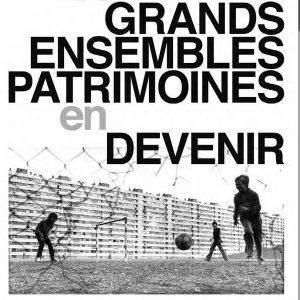
Les Grands ensembles : Patrimoines en devenir. Crhoniques de la valorisation, dévalorisation et revalorisation d’opérations exemplaires à Saint-Etienne. This book takes as objects of reflection large exemplary sets: those of the southeast of Saint-Étienne. Beaulieu, counting among the series of six, which in 1953 launches major French ensembles, is now labelled Heritage twentieth century. Its neighbour Montchovet knew almost all the political devices of the city, including the demolition in 2000 of the Chinese Wall, an unavoidable building in the Saint-Etienne landscape. A return on the history of urban policies and the settlement of these ensembles, coupled with a reading…

Call for Papers: Histories of Postwar Architecture – Mass Media and the International Spread of Post-war Architecture

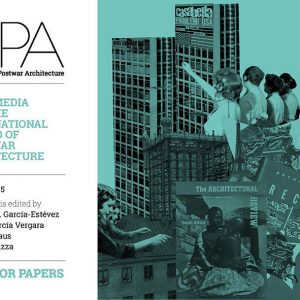
This monograph edition of the journal HPA attempts to map the international spread processes of architectural culture in the mass media after the Second World War, taking the period 1945-1960 as a traditional time framework. It focuses on how certain ideas about the city and contemporary architecture were diffused through periodical publications, exhibitions and conferences, by analyzing some monographic case studies in an attempt to answer some essential questions: How was an architectural and/or urban project linked to a specific framework, presented in the international context through state, professional and educational channels -be they either institutional or otherwise? How did…

Eileen Gray – Her Work and Her World

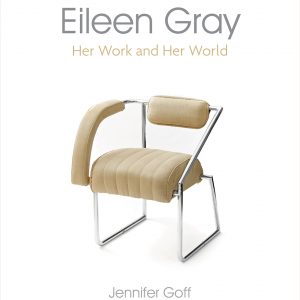
The renowned and highly influential architect, furniture-maker, interior designer and photographer Eileen Gray was born in Ireland and remained throughout her life an Irishwoman at heart. An elusive figure, her interior world has never before been observed as closely as in this ground-breaking study of her work, philosophy and inner circle of fellow artists. Jennifer Goff expertly blends art history and biography to create a stunning ensemble, offering a clear beacon of light into truly understanding Gray – the woman and the professional. Gray was a self-taught polymath and her work was multi-functional, user-friendly, ready for mass production yet succinctly…

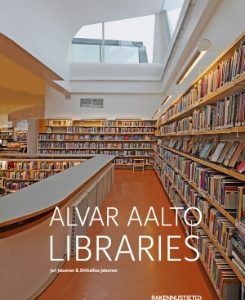
Alvar Aalto Libraries

Alvar Aalto Libraries presents all nineteen of Alvar Aalto’s completed libraries as well as the Academic Bookstore in Helsinki. Chronologically, the completed buildings range from Viipuri Library in the 1930s to Alajärvi Library in the 1990s, which was built after Aalto’s death. Aalto’s libraries have served various needs, for instance, as part of larger administrative, institutional or cultural centres. A significant group is the public libraries, such as those in Seinäjoki, Rovaniemi and Wolfsburg. Another significant group, which includes the libraries at the University of Jyväskylä, Aalto University and the Mount Angel monastery, are his scholarly libraries. The libraries in…

Alvar Aalto Homes

Our entire culture rests on the nature of our dwellings, stated Alvar Aalto in a lecture he delivered in Munich in 1957. During the course of a career spanning over 50 years, Aalto designed a total of nearly 100 single-family houses, apartments blocks, student dormitories and summer homes. Many of them are architectural gems, in which his thoughts about dwelling and architecture converge. Aalto considered experimental building to be very important: in his opinion, there should always be an opportunity for experimentation in every project, for it is only in that way that architecture can be promoted and quality improved…