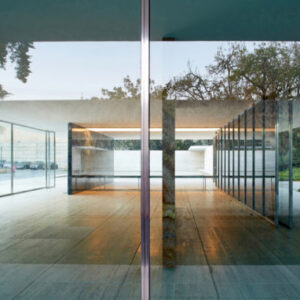
The Lilly Reich Grant for equality in architecture aims to support the study, dissemination and increasing the visibility of the contributions in the field of architecture which have been unduly relegated or forgotten due to discriminatory reasons. The grant also seeks to promote access in the equality of opportunities in architectural practice. This modality of the Lilly Reich Grant for Equality in Architecture is specifically addressed to the study, dissemination and visibility of Lilly Reich’s own contributions to the field of architecture. More information and the rules for applying are available on the Fundació Mies van der Rohe website.
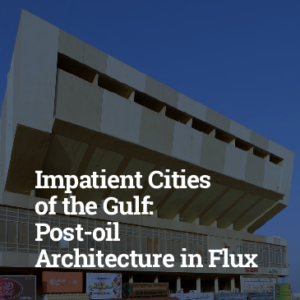
HPA Issue 8, Roberto Fabbri (University of Monterrey, MX) and Iain Jackson (University of Liverpool, UK) Today’s general perception of Gulf cities is based on the assumption of a futuristic vision; a visionary development and a cluster of hi-tech constructions. Since the striking of oil, this ‘brave new world’ has been a testing ground for experimental, risk imbued architecture and real estate. The sudden affluence and ambition of the rulers to demonstrate progress and social advancements (sometimes expressed through outlandish ‘iconic’ designs) has certainly fired this drive. The building of cities seemed an appropriate culvert for the vast funds generated, turning what…
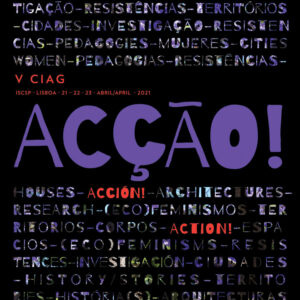
The V International Congress Architecture and Gender | ACTION. Feminisms and the spatialization of resistances continues the reflections organized since 2015 and mainly from southern Europe, enabling the construction of networks, research and transcontinental experiences. In this genealogy, with varied programs and themes, the previous congresses are ArquitectAs (2014, Seville), Matrices (2015, Lisbon), MORE (2017, Florence), and Fielding Architecture (2019, Brighton). The fifth edition emphasizes the political component of space and rights intersection, never forgetting the diversity of being a woman or a girl and the crossing with the current circumstances derived from the COVID-19 pandemic. In 1995, the Beijing Declaration and Platform for Action, adopted at IV World…
Approach to the environment has recently undergone a fundamental reconsideration. Le Corbusier’s urban visions of high-rise structures marked a radical disparity between nature and human interventions in it, which shaped the human-designed environment enormously. Many of the transformations of the urban landscape took place in the name of economic interests; cities and built environment became sites where political and ecological interests clashed. After celebrating the revolutionary and progressive outcomes of such collisions, attention to negative human impact on natural environment has come to the fore in the last decades. Practitioners started implementing into their practice knowledge of the effects of…
The International Institute for Conservation of Historic and Artistic Works is encouraging attendance in the IIC Edinburgh Congress “Practices and Challenges in Built Heritage Conservation” from conservators and cultural heritage professionals from all over the world and for those who are at different stages of their career including students and early career professionals. Details of grants currently available are listed below. Anna Plowden CPD Grants Anna Plowden Trust is supporting a CPD grant to cover the full cost of IIC membership for one year for practicing conservators based in the UK, enabling recipients to attend the IIC Edinburgh Congress online…
The Society of Architectural Historians seeks nominations and self-nominations for five members to serve on a newly-established SAH Inclusion, Diversity, Equity, Accountability, and Sustainability (IDEAS) Committee. SAH recognizes that it needs to examine its culture, processes, and structure and take actionable steps in order to meet the goals laid out in its IDEAS Initiative. To that end, SAH will have an IDEAS Committee made up of SAH members, Board members, and staff. The Committee members will be charged with developing and guiding a Diversity, Equity and Inclusion policy that also encompasses Accountability and Sustainability. The Committee will work with the SAH…
EDA, VOL. 8, n.1, 2021 Editors | Curatori Olimpia Niglio, Noriko Inoue, César Augusto Velandia Silva Title: “Human Heritage and Cultural Landscape. Contemporary declinations” The 1992 UNESCO Convention is an important legal reference for the knowledge an enhancement of cultural landscapes that represent a heritage in which nature bears the marks of man’s work and tells its history, experiences, memories, and meanings. These landscapes describe the evolution of human society and the transformations achieved over time that have then conditioned the development of the territories. The rapid social and economic changes that we are witnessing in recent decades have led…
International Symposium, organized by GERPHAU Lab (philosophy, architecture, urban world, EA 7486 Ecole Nationale Supérieure d’Architecture de Paris-La Villette) and the ARENA Association. Paris, 11-12 March 2021 No one knows what the real consequences for habitat, climate change and the degradation of the biosphere will be in the next fifteen, thirty or fifty years. But the disasters are already there. Whole neighborhoods collapse and their inhabitants are drowned, burned, swept away, suffocated by physical phenomena that clash with human settlements. New threats are intensifying. The recent Covid-19 pandemic also highlights the toxic synergies that are woven between pressures on natural…
A special issue of Architectural Theory Review (vol. 25, no. 1), edited by Irina Davidovici (ETH Zürich) and Laila Seewang (Portland State University) The residual associations that timber architecture maintains with tradition, local culture and manual craft have long been challenged by its global ubiquity. This inner contradiction was already visible in the paradox of 1920s timber modernism: a locus of tangible tensions between universal commodity and regional culture, enmeshing mythical nation-building with entirely pragmatic rationales. Unlike steel or concrete, other materials quintessentially bound up with modernity, timber has widely been perceived as a corrective to modernism. As an organic, living material, it demands a…
“But what is the story of all of the Americas if not the chronicle of the marvelous and the real?”, wrote Cuban author Alejo Carpentier in the preface of The Kingdom of This World ([New York: Farrar, Straus and Giroux], 2017: [page: xx]). This rhetorical question firmly resonates when studying Surrealism in Latin America. Scholars have given significant attention to the idea of the marvellous in visual arts and literature to define the inventions and reinventions of Surrealism in the New World. However, we could also rethink the marvellous in relation to the utopian impulse and discourses that have shaped the…