The Ofir House – Casa Dr. Fernando Ribeiro da Silva Ofir, Esposende, 1956-1958, by Fernando Távora

Abstract
The Ofir holiday house was the first work by Fernando Távora (1923–2005) published in the Arquitectura magazine (nº 59, July 1957). It was presented as a work that searched a personal language which reconciled the values of traditional Portuguese architecture and new technologic and material achievements.

Keywords
Modern Movement, Modern architecture, Fernando Távora, Ofir House, Portuguese modern architecture.

Issue 47
Year 2012
Pages 94
DOI: https://dx.doi.org/10.52200/47.A.1LBO7JHJ

PDF (English)
Nadir Afonso: the Painter (who graduated) Architect

Abstract
Nadir Afonso, one of the most well known (and recognized) Portuguese painters, has dedicated a great deal of his life to practicing the profession from which he graduated as an architect a facet that is still commonly unknown by the great public, as it was just slightly studied by the history of contemporary Portuguese Architecture. Regarding his career, it is to particularly note the periods he spent abroad, working with Le Corbusier and Niemeyer. These influential authors of the Modern Movement gave him the opportunity to participate in various projects that marked the history of architecture. This singular international phase manifestly resulted in Modern influences that are visible in the work he later built in Chaves. Nadir Afonso ended up abandoning the profession, since when he has dedicated himself to Painting on a full-time basis.

Keywords
Modern Movement, Modern architecture, Modern interior design, Nadir Afonso, Portuguese modern painting, Portuguese modern architecture.

Issue 47
Year 2012
Pages 84-90
DOI: https://dx.doi.org/10.52200/47.A.THTSV99E

PDF (English)
Alexander von Vegesack

Abstract
In July 2012, Bárbara Coutinho, Director of MUDE–Design and Fashion Museum, Francisco Capelo’s Collection since 2006, interviewed Alexander Von Vegesack, founding Director of the Vitra Design Museum in Weil am Rhein and the person who set up Thonet Museum in Boppard am Rhein. The subject of this interview is the importance of Collect—Curate—Exhibit—Publish to the Preservation and Communication of Modern Architecture/Design.

Keywords
Modern Movement, Modern architecture, Modern interior design, Furniture modern design, Modern global design, Alexander von Vegesack, Collect, Curate, Exhibit, Publish, Preservation and architectural communication, Modern design conservation.

Issue 47
Year 2012
Pages 80-83
DOI: https://dx.doi.org/10.52200/47.A.UE8G4YNU

PDF (English)
Chandigarh Heritage Furniture

Abstract
Although Chandigarh is linked to Le Corbusier due to the urban planning and the buildings of the Capitol complex, the footprint of the tandem between Jeanneret and the Fry–Drew team goes far beyond as reflected for example in different housing typologies and the design of interesting furniture collections. These have been seldom described and evaluated, perhaps partly due to the lack of attention that the authorities have towards Chandigarh’s heritage.

Keywords
Modern Movement, Modern architecture, Modern interior design, Furniture modern design, Modern global design, Chandigarh modern architecture, Le Corbusier, Pierre Jeanneret, Fry and Drew.

Issue 47
Year 2012
Pages 74-79
DOI: https://dx.doi.org/10.52200/47.A.HJLNB2H8

PDF (English)
Le Corbusier and GATCPAC: Functionalism and Latin Identity

Abstract
This study presents a brief history of design in the context of historic avant-gardes. It shows that, in parallel to the more classical historiographical interpretation which followed Pevsner’s ideas to “internationalize” the production of the 20s and 30s, other models with vernacular Latin roots were obviated.

Keywords
Modern Movement, Modern architecture, Modern interior design, Furniture modern design, Modern global design, GATCPAC, MIDVA, Le Corbusier, Catalan modern architecture.

Issue 47
Year 2012
Pages 68-73
DOI: https://dx.doi.org/10.52200/47.A.TL5QHJGI

PDF (English)
The Vision of Utopia

Abstract
Designed in late 1932 by Josep Lluís Sert and Josep Torres Clavé, Casa Bloc is one of the paradigmatic works of these architects who represented the most active core of the Modern Movement in Catalonia, known as GATCPAC (Group of Catalan Architects and Technicians for the Progress of Contemporary Architecture), founded in 1930 echoing the Spanish GATEPAC. I use the word “paradigm” in the sense of a theoretical framework or set of theories. In fact, Casa Bloc was not only the first major social housing building in Barcelona conceived in functional terms but it also exemplifies the reception in this city of the notions of the Modern Movement and how the guidelines recently approved in the 4th CIRPAC Congress were applied.

Keywords
Modern Movement, Modern architecture, Modern interior design, Furniture modern design, Modern global design, GATCPAC, Casa Bloc, Catalan modern architecture, Modern social housing.

Issue 47
Year 2012
Pages 62-67
DOI: https://dx.doi.org/10.52200/47.A.OSAUWKM3

PDF (English)
Contemporary Activity. The GATEPAC Magazine (1931-1937)

Abstract
In May 1931, the first issue of the long–awaited Spanish modernity platform appeared: A.C. Actividad Contemporánea. Although the publication of the magazine had become an indispensable requirement for the existence of the GATEPAC, its manufacturing process turned out to be very long and fraught with difficulties.

Keywords
Modern Movement, Modern architecture, Modern interior design, Furniture modern design, Modern global design, A.C. Actividad Contemporánea, GATEPAC, Spanish modern architecture.

Issue 47
Year 2012
Pages 56-61
DOI: https://dx.doi.org/10.52200/47.A.HW1ZDODO

PDF (English)
Cinémas Choisis

Abstract
his essay analyzes the cinemas that were featured in L’Architecture d’Aujourd’hui from 1930 until 1939. This being one of the most influential magazines for the spread of Modern Movement ideas, its editorial line focused on the adaptation of building to function and on the distinction between European and American cinemas. Theoretical texts separated classic live theatre from cinema design since programme and features were completely different. Far from American euphoria and classic theatre sobriety, how was architecture for cinema envisaged?

Keywords
Modern Movement, Modern architecture, Modern interior design, Furniture modern design, Modern global design, L’Architecture d’Aujourd’hui, Modern cinemas.

Issue 47
Year 2012
Pages 52-55
DOI: https://dx.doi.org/10.52200/47.A.43E7MT76

PDF (English)
Werner Max Moser’s New Altstetten Church 1936-1941

Abstract
For George Everard Kidder Smith, the Protestant Church at Altstetten (a former Zurich suburb, integrated in 1934) was “unquestionably the finest Modern church in Switzerland, and possibly anywhere else”. In his famous anthology of Swiss architecture from 1950, he points out that it embodies on the one hand “almost all the church building philosophy which both the protestants and catholics have sought: one room of simplicity and dignity, binding the pulpit and the altar to the congregation in respectful unity”. On the other hand, he was interested in the fact that the church, built on the edge of a low hill, seeks a subtle relationship with an old village church that the congregation had outgrown. Instead of destroying it, Moser “carefully preserved and related it to the new by the angle and space relation between them and by the repetition of a mutual eave height.” With a few words, Kidder Smith succeeded in capturing the double interest that Moser’s building represents even today. As a matter of fact, the church center’s interiors are, as well as the exteriors, wonderfully calibrated, fragile compositions that fascinate us for their typically undogmatic combination of modern and conventional materials and (decorative) forms, but also for Moser’s informal but precise dealings with the architectural heritage. It is immediately understandable that renovating and extending this building complex was quite a challenge.

Keywords
Modern Movement, Modern architecture, Modern interior design, Furniture modern design, Modern global design, Werner Max Moser, New Altstetten Church, Modern churches, Swiss modern architecture.

Issue 47
Year 2012
Pages 46-51
DOI: https://dx.doi.org/10.52200/47.A.6UL46N48

PDF (English)
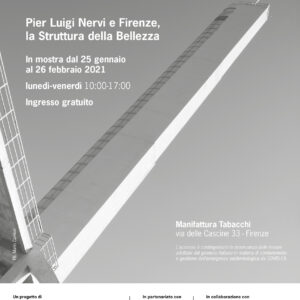
Exhibition: Pier Luigi Nervi – Architettura come Sfida

Docomomo Italy is inviting you to visit the exhibition Pier Luigi Nervi – Architettura come Sfida [Pier Luigi Nervi – Architecture as a Challenge]. “Manifattura Tabacchi will host the exhibition Pier Luigi Nervi Architettura come Sfida (Architecture as a Challenge), an international retrospective dedicated to one of the most significant Italian engineers of the 20th century. The culmination of a vast research project, this detailed journey through Nervi’s work is marked out by twelve iconic projects, selected by an international scientific committee chaired by Professor Carlo Olmo, and with materials illustrating the project for Manifattura Tabacchi. Scale models, designs and…