


Bridges and Infrastructures
The search on Bridges and Infrastructures has to do with a matter of connecting. To launch bridges seems to be a kind of life requirement, as far as it is the way to connect sides, which means improving relations and energies, desire and intelligence. Bridges and Infrastructures have the function of connecting pieces of land and the role of creating a connected world. The matter is to make links and establish a network. In fact, it is a global network made of works of art, which have a physical and material presence balancing between values such as economy and elegance and providing a better life for every man. Seeking audaciously for innovation, research contributes to these large scale structures as it has been improving material capacities and technical creation. It is a huge field that lay infinite possibilities for art and science to perceive changes of social, aesthetic, technical standards and norms.
see full text
see full text
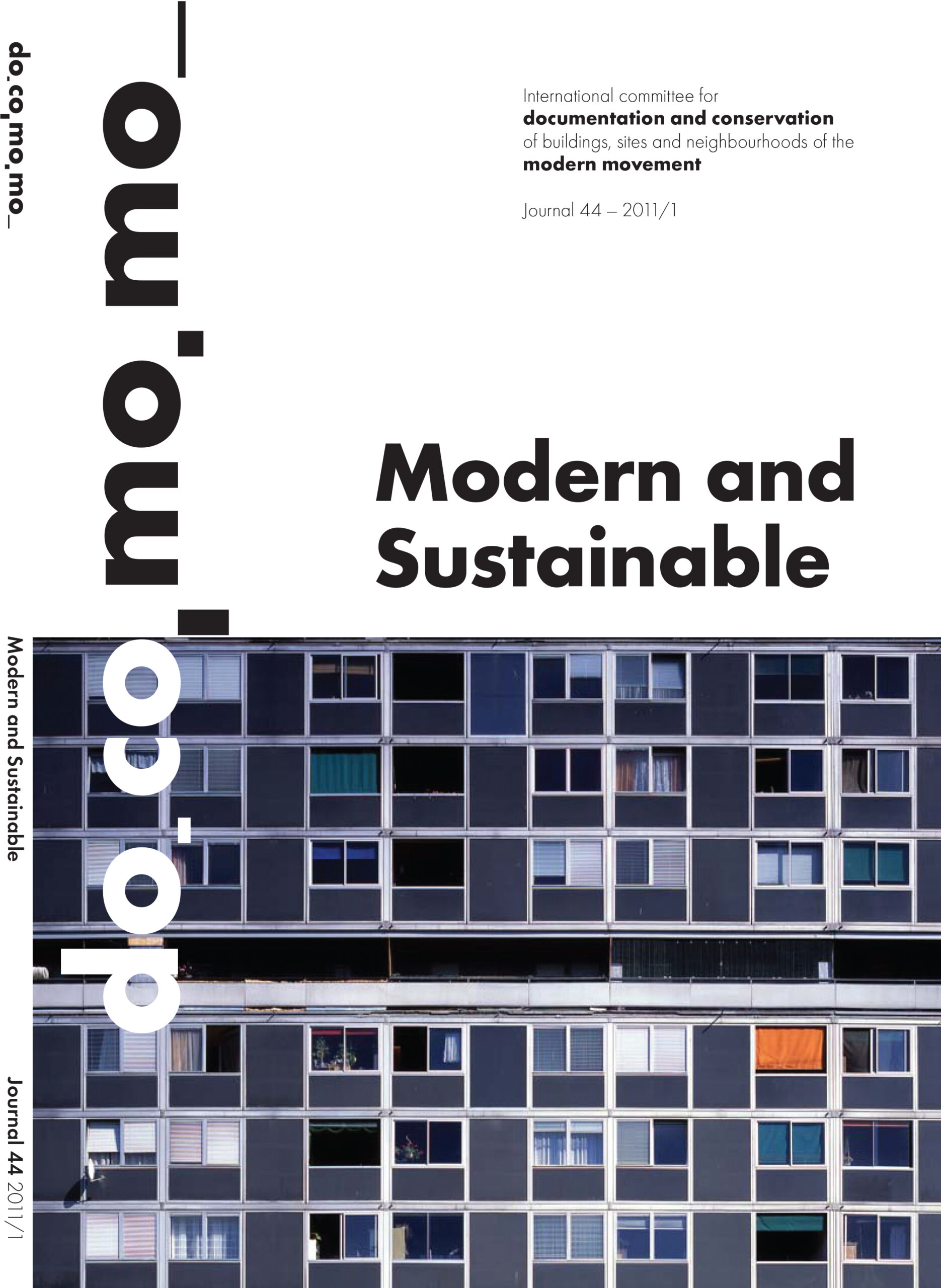
Modern and Sustainable
Modern Movement Architecture is envisioned as a concept that deals with forms, spaces, techniques and social responsibility. In this docomomo Journal, the contributions on this discussion put together modernity and Modern heritage, economy and energy saving, the social mission and the responsibility of architects towards the future. Modern Movement is often mistakenly related to a style, perceived in a skin–deep point of view and superficially adopted as simple form, as a modern shape, when in fact Modern Movement has always shown great concern with such issues, seeking for eficiency and economy, i.e., an accurate use of materials, a design approach that incorporates intelligent saving resources in order to create a better world.
see full text
see full text
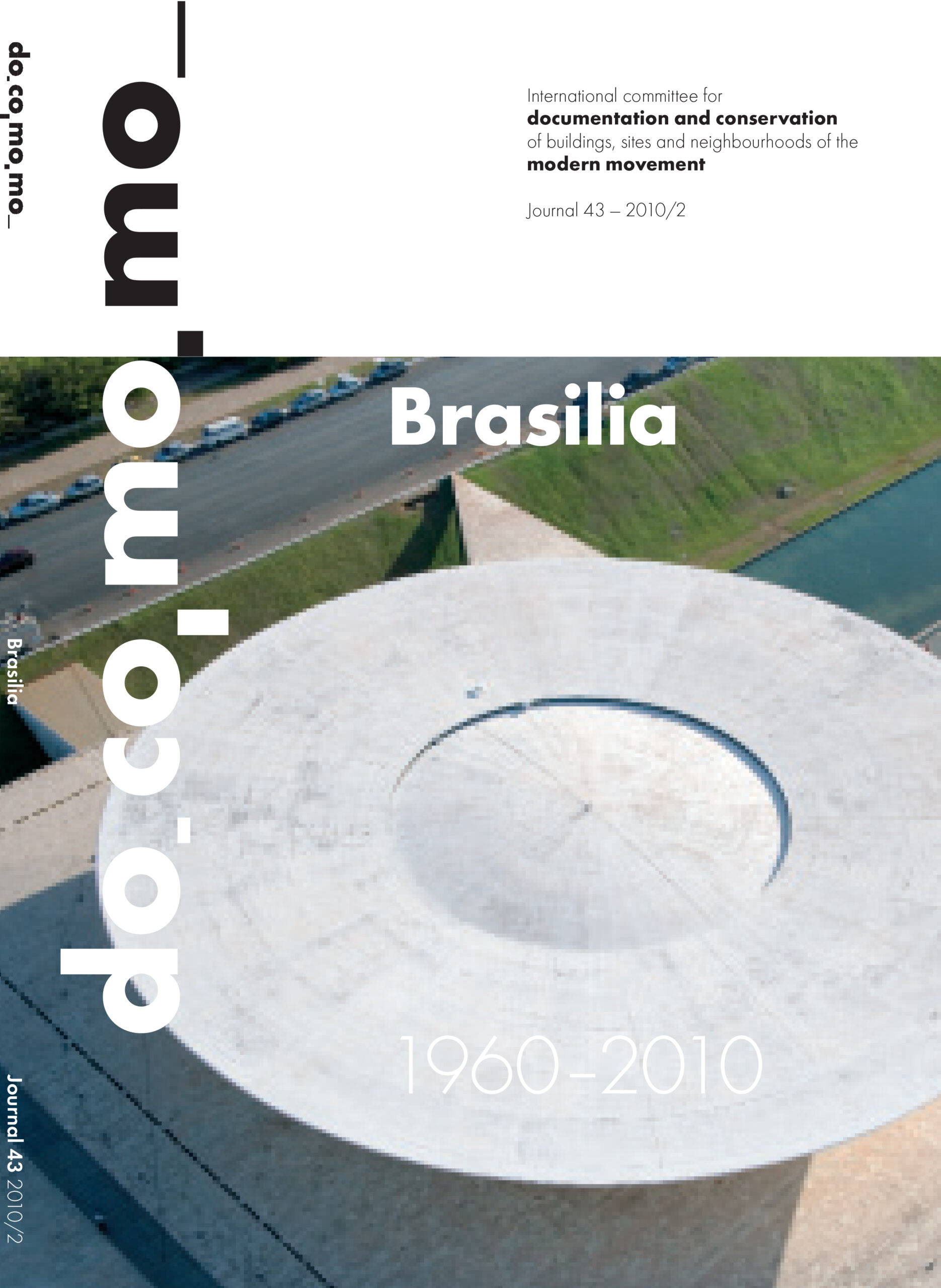
Brasilia
Since Brasilia’s World Heritage inscription in 1987, the city has developed public awareness regarding the value of a major accomplishment in the history of urbanism. The singularity of Brasilia lies in its ability of being simultaneously rooted in the past while looking ahead to the future, envisioning an approach that should affirm Brazil’s industrialization effort and the need to provide access to life quality incorporating a specific genuine cultural tradition; an approach where the new capital should be the image of the homeland. Lúcio Costa, the architect who sensed and perceived the need to rescue architectural heritage, formulated unprecedented theoretical principles, articulating both realities. He was aware of the fact that modern architecture was a powerful means to foster a national identity because, according to modern principles argued in Brazil, a bond should exist between an erudite avant-garde and traditional popular features. Costa revealed the structural resemblance between raw architecture from the 18th Century—the plain Portuguese style—and the new constructions, discovering the same logic, rationality, rigor and strictness.
see full text
see full text

Art and Architecture
The late CIAM discussions, namely the ones that took part in the scope of the Bergamo Conference in 1947, brought social and intensive public aspirations. Between North and South, the new world retook the European avant-garde issues implementing the most collective values for a better future to come. Giedion’s Architecture You and Me or the struggle for a New Monumentality, were the placed questions that received an extraordinary eco from American Architecture which emerged with a creative energy. Therefore, in our days, the aim is to deepen understand the process and to find the paths for the future. A future that we may create with such awareness that may, generously, give us the tools for increase nowadays architecture and city planning.
see full text
see full text