Docomomo Portugal is glad to announce that the restoration of the Engineers’ Houses in Picote has been recognized with an Honourable Mention at the International Award DOMUS Restoration and Conservation Fassa Bortolo – Historical Pre-existences and Architecture.
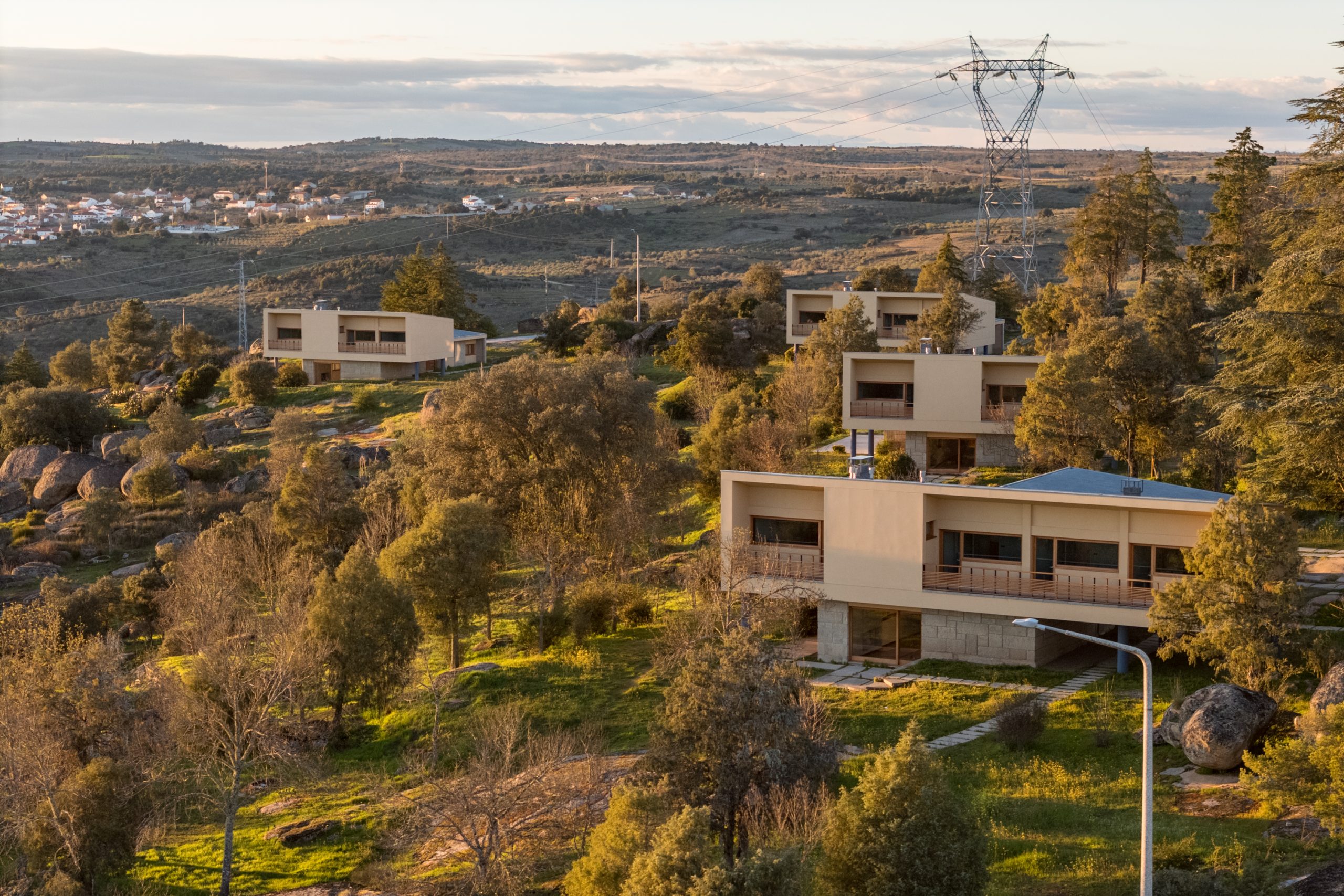
The intervention, designed by the architects Fátima Fernandes and Michele Cannatà (Cannatà & Fernandes), is characterized as a conservative restoration of the “Engineers’ Houses of Picote” in Portugal. Built in the 1950s, the complex was designated as a listed building in 2011, partly due to the careful integration of the architecture into the landscape.
The original project was designed by the architect Manuel Nunes de Almeida (1914–2014) as part of the Design Office of the Hidroeléctrica do Douro (HED) and built between 1954 and 1955. It consists of five units of three different types (PD11, PD13, and PD15), ranging from the larger four-bedroom villas to smaller three-bedroom units. The layout is clearly shaped by natural features such as rocks and vegetation, placed within an unfenced landscape adapted to the granite terrain. The interplay of volumes, large voids, the use of pilotis, and continuous windows are hallmarks of the finest modern Portuguese architecture, as it developed its own distinctive approach within a critical response to the International Style from the early 1950s onward.
Cannatà & Fernandes’ restoration project, carried out between 2008 and 2025, is defined by three distinct scales of intervention: the architectural scale, the relationship between the built environment and the landscape, and the purely landscape scale.
The architects saw the intervention more as a maintenance intervention than just a purely restoration as a special focus was set on the buildings’ surfaces (roofs, floors and coverings) and the updating and revision of the plumbing networks (hydraulic, electrical and thermal). It was planned as a renovation and restoration work with the introduction of some functional elements to adjust to nowadays’ privacy requirements in bedrooms and bathrooms.
The jury selected the project for its scientific rigor and its effective response to the challenges of contemporary sustainability. The intervention was specifically recognized for its ability to ensure the material and energy recovery of the buildings while maintaining a deep respect for the pre-existing architecture, allowing for the conservation of the heritage without compromising its historical and architectural integrity.
More about the project on Cannatà & Fernandes’ website .